The Smart Way to Pay Back Debt
You don't have to be an accountant to figure out the best way to pay back debt, and it doesn’t take forever, but it does have a significant effect on how much you end up paying.
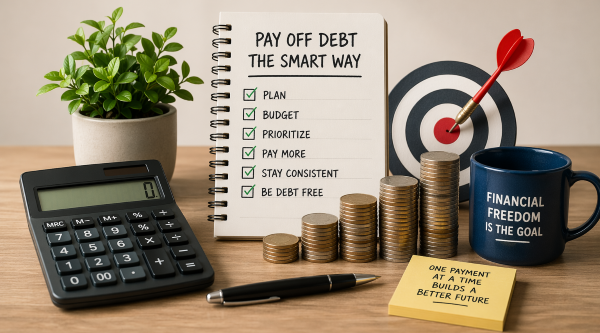
Begin by writing a list of every debt you have, its size, and the interest rate on that debt.
It might be difficult organizing all of this information, but it’s worth getting it all together in one place and writing it down.
Make sure you list such items as credit cards (each one individually with attention to the different rates and balances for purchases and cash advances), other cards, loans, mortgages, and even money you’ve borrowed from friends and family.
List every bit of debt you have, as this will yield the most intelligent manner of paying this debt off.
Good Debts Versus Bad Debts
Once you’ve organized your debts, categorize them into the following two categories, using the following types as a guide:
Good debts: mortgages, student loans, car loans.
Bad debts: credit cards, store cards
Though this may seem unusual, some kinds of debt are nowhere near as bad as others. A mortgage, for example, is an investment in a house, paid over a fixed term. Thus, you know how much you’ll pay and can be certain that you’ll only pay it for a certain period (and you know what you’re changing when you refinance).
As a rule, good debts are for a fixed amount of time and allow you to buy something valuable that you cannot afford, while bad debts are generally created by using credit cards instead of cash.
Prioritize Your Debt by How Soon You Should Pay it
Next, ignore the good debts you have. These ones are less costly and should be considered second to costlier debt. Now, arrange your bad debts in order of interest rate, with the highest interest rate at the top.
The most likely top debts will be store cards or credit cards, which could have a really huge interest rate. Transfer as much money as you can from the high-interest cards down the list to the lower-interest ones, so you pay less interest overall, even if your debt hasn’t changed.
Next, reallocate your expenditures to reflect this system. Focus all your energy on repaying the new top debt. Pay the minimum on everything else, and throw as much money as you can find at the problem.
Consider cancelling non-essential monthly commitments, and put that money towards your payments. As these debts most likely have a higher interest rate than your savings account, stop saving for this period. You may want to try keeping track of where your money goes, as you might find that you’re spending loads on something you don’t even want or need.
As an extension, pause expensive habits while you pay this debt off. You’ll be shocked how fast your debts can go down if you have true discipline about this. I understand that things will be more difficult during this period, but you’ll thank yourself in the future.
You might have noticed an almost at-all-costs approach to reducing your most expensive debt. This is because this debt is extremely costly, and not paying it off now can eat big time into your money later, or even send you into bankruptcy.
Home Page > Real Estate Articles >> The Smart Way To Pay Back Debt
🔥Top Pages Feb 2026

🏷️ Real Estate Marketing Slogans →Magnetic Taglines That Pull Clients Toward You Instantly
🎯Real Estate Postcards →
Ideas that turn everyday mail into real estate magic.
📝 Real Estate Marketing Talk Blog → Ideas That Flip the Script on Agent Visibility
📬 Is @026 a Good Time to Buy or Sell? → The market's not so clear about it right now!
💌Real Estate Letters → High‑Impact Templates That Make Sellers Stop, Read, and Call
🚪 Your Gateway to Targeted Insights

👔 For Agents →
Branding tips, lead gen strategies & marketing tools to grow your business
🏡 For Buyers → Smart buying guides, market insights & negotiation tips for your next move
📦 For Sellers → Listing prep, pricing strategies & proven tactics to sell fast and profitably
💰 For Investors → ROI-focused content, property analysis tools & market trend breakdowns