Real Estate Marketing Talk Blog
Where agents grow. Buyers learn. Sellers win. Investors analyze.
Sep 15, 2026
Real Estate Postcard Headline Examples That Get Calls
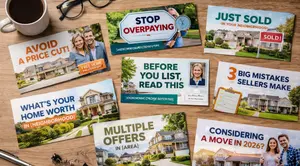
Do you know what will make homeowners pause when reading real estate postcards? Real estate postcard headline examples like these. They show how relevance and tone build quiet trust.
Continue reading "Real Estate Postcard Headline Examples That Get Calls "
Sep 14, 2026
Real Estate Marketing Store | Letters, Content & Lead‑Building Tools
Explore curated real estate marketing tools, letters, content, and lead‑building resources. Guided starting points help you choose exactly what you need.
Continue reading "Real Estate Marketing Store | Letters, Content & Lead‑Building Tools"
Sep 13, 2026
Real Estate Website Content That Converts

Create real estate website content that builds trust and drives conversations. Publish faster with ready‑made articles and simple, effective messaging.
Continue reading "Real Estate Website Content That Converts"
Sep 11, 2026
Smart Ways Agents Generate Online Real Estate Leads Today

Strong systems help you generate online real estate leads that stay warm, engaged, and ready for real conversations that move your business forward.
Continue reading "Smart Ways Agents Generate Online Real Estate Leads Today"
Sep 10, 2026
Real Estate Marketing Tips: Proven Ideas to Attract Buyers & Sellers

Finally, real estate marketing tips that give agents fresh energy, practical support, and clear ways to connect with buyers and sellers and build lasting momentum.
Continue reading "Real Estate Marketing Tips: Proven Ideas to Attract Buyers & Sellers"
Sep 09, 2026
Real Estate Bio Examples That Build Trust Fast

See real estate bio examples, a simple 4‑part bio blueprint, and a fill‑in‑the‑blanks template that helps agents write confident, trust‑building profiles.
Continue reading "Real Estate Bio Examples That Build Trust Fast"
Sep 08, 2026
Proven Real Estate Flyer Tips to Boost Leads Fast

Real estate flyers stay effective when they’re clear and local. Networking for real estate leads keeps agents visible and strengthens every marketing touchpoint.
Continue reading "Proven Real Estate Flyer Tips to Boost Leads Fast"
Sep 07, 2026
Networking for Real Estate Leads: Simple Ways Agents Get More Clients

Strong lead flow starts with small moments. Networking for real estate leads thrives on thoughtful interactions and clear follow‑up that spark real client conversations.
Continue reading "Networking for Real Estate Leads: Simple Ways Agents Get More Clients"
Sep 05, 2026
Afortuna Estates - Inmobiliaria Gran Canaria

Afortuna Estates - Inmobiliaria Gran Canaria assists buyers, sellers and property owners from its office in Arucas. The agency covers Las Palmas de Gran
Continue reading "Afortuna Estates - Inmobiliaria Gran Canaria"
Sep 04, 2026
Real Estate Flyers Win Listings With Smart Designs & Local Visibility

Real estate marketing flyers still pull leads fast. Discover simple targeted design ideas that spark action—that listings agents in your area are already winning.
Continue reading "Real Estate Flyers Win Listings With Smart Designs & Local Visibility"
Sep 01, 2026
Real Estate Farming Postcard Scripts (Proven Messages That Get Calls)
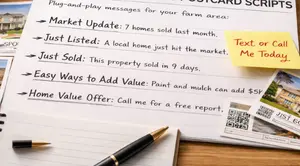
Clear, steady postcard scripts help agents stay remembered in their farm. Networking for real estate leads supports consistent outreach that builds trust.
Continue reading "Real Estate Farming Postcard Scripts (Proven Messages That Get Calls)"
Aug 31, 2026
Real Estate Investor Resources — Market Analysis & Risk Evaluation

Explore real estate investor resources focused on market impact, neighborhood stability, flipping strategy, and foreclosure risk assessment.
Continue reading "Real Estate Investor Resources — Market Analysis & Risk Evaluation"
Aug 29, 2026
Low Cost Real Estate Postcard Marketing for Listing Leads

Start simple postcard marketing that works. Mail smarter, farm neighborhoods, and turn low-cost postcards into steady seller calls and listings.
Continue reading "Low Cost Real Estate Postcard Marketing for Listing Leads"
Aug 26, 2026
Real Estate Prospecting Letters That Get Responses for Agents

Laser‑focused and highly relevant — that’s what makes Real Estate Prospecting Letters That Get Responses for Agents truly effective.
Continue reading "Real Estate Prospecting Letters That Get Responses for Agents"
Aug 25, 2026
How Smart Agents Use Business Cards to Strengthen Their Brand

Your business card can strengthen your brand when used intentionally. Learn how simple design choices help agents stand out and create stronger first impressions.
Continue reading "How Smart Agents Use Business Cards to Strengthen Their Brand"
Aug 24, 2026
Seven Sample Real Estate Letters That Get Read — And Get Results

Use these seven proven real estate letters to spark action with buyers, sellers, investors, FSBOs, renters, and absentee owners. Copy, customize, and mail today.
Continue reading "Seven Sample Real Estate Letters That Get Read — And Get Results"
Aug 22, 2026
Why Most Agents Overcomplicate Marketing (And What Actually Works)

Many agents overcomplicate marketing and miss what actually works. Learn the simple habits that create momentum, build trust, and generate consistent activity.
Continue reading "Why Most Agents Overcomplicate Marketing (And What Actually Works)"
Aug 21, 2026
Real Estate Lead Generation Ideas That Produce Listings and Buyers

Agents who grow consistently generate leads with intention. This post shares simple ideas to spark conversations, build recognition, and stay visible where it matters.
Continue reading "Real Estate Lead Generation Ideas That Produce Listings and Buyers"
Aug 20, 2026
Newsletter Real Estate Leads

Agents who stay remembered communicate consistently. Email newsletters deliver steady value, build trust early, and outperform scattered outreach in every market cycle.
Aug 19, 2026
Real Estate Newsletter Articles — 50 Prewritten Pieces You Can Publish Today
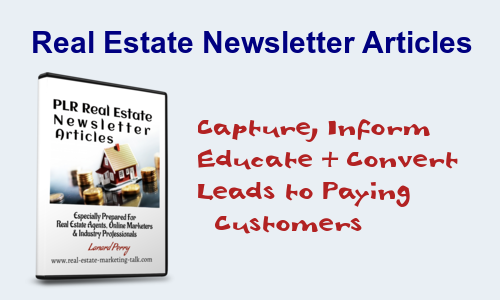
Agents who write newsletters from scratch lose hours to faster competitors. This PLR package gives you 50 ready‑to‑use articles you can brand and publish instantly.
Continue reading "Real Estate Newsletter Articles — 50 Prewritten Pieces You Can Publish Today"
Aug 18, 2026
Agents Are Launching Lead‑Pulling Newsletters Overnight — Don’t Be the Last One In

Buyers and sellers hear from agents who show up with steady updates. If you’re not in their inbox, you’re losing ground. This guide helps you join that rotation fast.
Aug 17, 2026
Agents Are Winning With Weekly eNewsletters — Are You Sending Yours Yet?

Agents who send consistent eNewsletters stay top‑of‑mind. If you’re not showing up in inboxes, you’re falling behind. This hub helps you build a newsletter that keeps you remembered.
Continue reading "Agents Are Winning With Weekly eNewsletters — Are You Sending Yours Yet?"
Aug 16, 2026
Stay in the Conversation: Newsletter Ideas That Keep You Relevant.

If your marketing goes quiet, other agents stay top‑of‑mind. Value‑packed newsletters fix that fast. This resource gives you ideas that keep you visible and remembered.
Continue reading "Stay in the Conversation: Newsletter Ideas That Keep You Relevant."
Aug 16, 2026
How Many Homes Should You Farm in Real Estate?

Agents lose listings when their farm is too big, too small, or never launched. This guide shows how to right‑size your farm so you stay consistent and stop losing territory.
Continue reading "How Many Homes Should You Farm in Real Estate?"
Aug 15, 2026
Real Estate Lead Generation Ideas That Build Consistent Momentum

Agents who want a steady flow of motivated prospects need a system that works every day, not just when the market is hot. Simple, repeatable actions—meeting new people, refining your listing presentation, and staying visible—create consistent opportunities.
Continue reading "Real Estate Lead Generation Ideas That Build Consistent Momentum"
Aug 14, 2026
Generating Real Estate Leads by Hosting Workshops and Seminars

Workshops create trust at scale and position you as the local authority. If you want warmer, more intentional leads, this guide shows how to structure and deliver events that convert.
Continue reading "Generating Real Estate Leads by Hosting Workshops and Seminars"
Aug 13, 2026
Real Estate Leads: Proven Strategies to Generate Listings, Buyers & Repeat Business
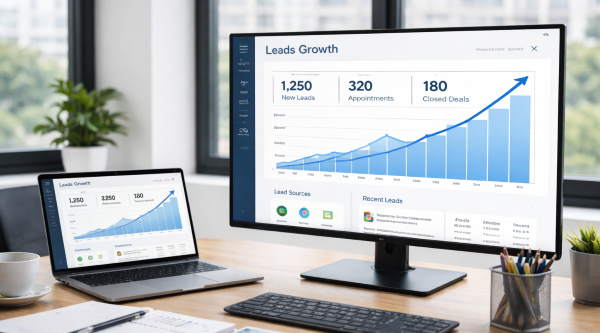
New agents quickly discover gaps in their lead‑building skills. This guide explains how real estate leads take shape and how simple actions help you gain traction and build momentum.
Aug 12, 2026
Does Affordable Housing Lower Property Values? Understanding NIMBY Concerns, Crime Fears, and Market Reality

Affordable housing has evolved far beyond the old, isolated projects. Modern mixed‑income models reshape neighborhoods, and understanding that shift is essential before judging market impact.
Aug 11, 2026
Real Estate Articles for Sellers: Smart Guidance for Today’s Market

Selling a home takes clarity and strategy, especially in a shifting market. This guide gives sellers practical advice on pricing, staging, timing, and negotiation from day one.
Continue reading "Real Estate Articles for Sellers: Smart Guidance for Today’s Market"
Aug 11, 2026
Michael Saunders, REALTOR® — RE/MAX Vision | The Tri-State Negotiator | Smart Moves Start with Michael

Michael Saunders is the Tri-State Negotiator — a full-time REALTOR® with RE/MAX Vision serving Maryland, Delaware, and Pennsylvania since 2013. Born and
Aug 10, 2026
Real Estate Marketing Ideas That Help Agents Generate Listings and Leads

The best marketing ideas don’t chase attention—they create momentum. Agents who win use tools that spark movement and keep their message cutting through noise in every market.
Continue reading "Real Estate Marketing Ideas That Help Agents Generate Listings and Leads"
Aug 09, 2026
Most Agents Don’t Need “Inspiration.” They Need Strategy.

Agents don’t need more inspiration—they need sharper thinking and tighter strategy. This article collection delivers clear, actionable marketing ideas built for agents who want to win.
Continue reading "Most Agents Don’t Need “Inspiration.” They Need Strategy."
Aug 07, 2026
Autoresponder Email Leads: How to Turn Cold Contacts into Warm Conversations

Generic follow‑up emails don’t win business. Agents who succeed use autoresponder systems that warm cold leads automatically and keep their pipeline moving while others stall.
Continue reading "Autoresponder Email Leads: How to Turn Cold Contacts into Warm Conversations"
Aug 06, 2026
How to Generate Real Estate Leads With Books

Books are an underrated lead‑gen tool. A simple guide positions you as the local expert homeowners trust and sparks warm conversations that lead to real opportunities.
Continue reading "How to Generate Real Estate Leads With Books"
Aug 05, 2026
Real Estate Postcard Wording Examples That Actually Get Calls

Prospects don’t respond to pretty postcards—they respond to messages that matter. These simple scripts spark calls fast and give you wording that homeowners actually read.
Continue reading "Real Estate Postcard Wording Examples That Actually Get Calls"
Aug 04, 2026
Rent‑to‑Own Guides for Buyers and Sellers

Rent‑to‑own gives buyers time to strengthen finances and offers sellers steady income. This guide explains how these agreements work and whether they fit your long‑term goals.
Continue reading "Rent‑to‑Own Guides for Buyers and Sellers"
Aug 03, 2026
FSBO: A Smarter Way to Sell Your Home Yourself

Timing matters when you’re selling. Today’s market rewards decisive action. This guide shows how to price, prepare, market, and negotiate with confidence to protect your equity.
Continue reading "FSBO: A Smarter Way to Sell Your Home Yourself"
Aug 02, 2026
The Expired Listing Letter Strategy Most Agents Are Too Lazy to Use

Most agents avoid expireds and chase easy leads. This guide shows how disciplined agents use targeted messaging to convert expireds while everyone else coasts.
Continue reading "The Expired Listing Letter Strategy Most Agents Are Too Lazy to Use"
Aug 01, 2026
How to Choose a Real Estate Farm Area That Works

Choosing the right farm area shapes everything that follows. This guide shows how to pick your neighborhood and stay top‑of‑mind with consistent, intentional mailings.
Continue reading "How to Choose a Real Estate Farm Area That Works"
Jul 31, 2026
Why Savvy Agents Stop Chasing Listings—and Start Attracting Motivated Sellers Naturally

If you feel pressured to chase listings, you’re not alone. This guide shows how sincerity—not scripts—creates a calmer, more human listing flow built on trust.
Jul 29, 2026
Why Real Estate Agents Fail at Content Marketing

Agents quit content too early. Consistent, helpful posts build trust, improve search visibility, and create steady opportunities. Momentum comes from publishing, not perfection.
Continue reading "Why Real Estate Agents Fail at Content Marketing"
Jul 28, 2026
Farm Expired Listings for Big Commissions: A Modern, System‑Driven Approach

Expired listings are overlooked but packed with opportunity. This guide shows how a clear, repeatable system turns missed chances into fresh commissions and real momentum.
Continue reading "Farm Expired Listings for Big Commissions: A Modern, System‑Driven Approach"
Jul 27, 2026
Real Estate Articles for Buyers and Sellers: What They Need to Know

Buying or selling requires clear guidance. This resource brings both perspectives together so you can understand pricing, timing, financing, and negotiation across the full transaction.
Continue reading "Real Estate Articles for Buyers and Sellers: What They Need to Know"
Jul 26, 2026
Real Estate Articles for Buyers: Smart Guidance for Your Next Move

Buying a home feels easier with clear guidance. This resource gives buyers checklists, timelines, and smart tips so every step feels manageable and confidence replaces guesswork.
Continue reading "Real Estate Articles for Buyers: Smart Guidance for Your Next Move"
Jul 25, 2026
Expired Listings: The Fastest Path to Fresh, High-Value Seller Opportunities
Acting quickly turns stalled properties into wins. This guide shows how a focused expired listing letter campaign positions you as the agent who leads with clarity and confidence.
Continue reading "Expired Listings: The Fastest Path to Fresh, High-Value Seller Opportunities"
Jul 25, 2026
If You’re Not Mailing Expired Postcards, You’re Losing to Someone Who Is
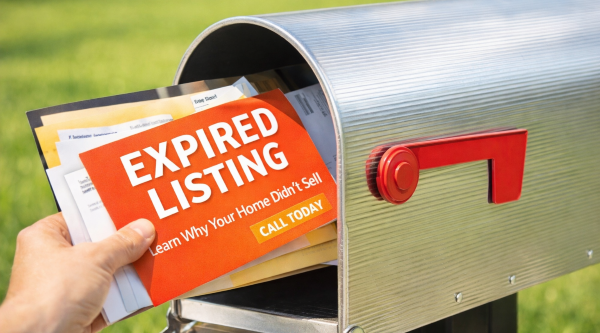
Expired sellers are tired of being strung along. These postcards work because they acknowledge frustration, offer a clear next step, and spark real conversations fast.
Continue reading "If You’re Not Mailing Expired Postcards, You’re Losing to Someone Who Is"
Jul 24, 2026
How Flyer Templates Help Agents Market Listings Faster

Flyer templates help agents turn listing details into polished marketing fast. This guide breaks down the tools and formats that make creating consistent, high‑quality flyers easy.
Continue reading "How Flyer Templates Help Agents Market Listings Faster"
Jul 23, 2026
Smart Moves for Stronger Real Estate Flyer Design

Strong flyer design helps agents stand out fast. Clean layouts, crisp photos, and a simple call‑to‑action turn casual interest into real conversations that move your marketing forward.
Continue reading "Smart Moves for Stronger Real Estate Flyer Design"
Jul 21, 2026
Why Expired Real Estate Listing Leads Are About to Matter To You More Than Ever

Expireds are rising, and sellers are frustrated. This guide shows how clarity and empathy help you approach expired leads with confidence and turn them into real opportunities.
Continue reading "Why Expired Real Estate Listing Leads Are About to Matter To You More Than Ever"
🔥Top Pages in July 2026

💌 Real Estate Marketing Talk Home Page→
Timely Strategies and Resources for Agents | Buyers, Sellers and Investors!
📝 Expired Listing Postcards →
Ideas That Flip the Script on Agent Visibility
🏷️How to Get Expired Real Estate Leads Without Cold Calling →
Create a system where expired listing owners call you first
📬Farming Expired Listings →
Simple System. Uncommon Results.
🏷️ Real Estate Agent Directory →
Magnetic Taglines That Pull Clients Toward You Instantly
🚪 Your Gateway to Targeted Insights

👔 For Agents →
Branding tips, lead gen strategies & marketing tools to grow your business
🏡 For Buyers → Smart buying guides, market insights & negotiation tips for your next move
📦 For Sellers → Listing prep, pricing strategies & proven tactics to sell fast and profitably
💰 For Investors → ROI-focused content, property analysis tools & market trend breakdowns