Emotional Home Staging Tips That Make Buyers Fall in Love with Your Property
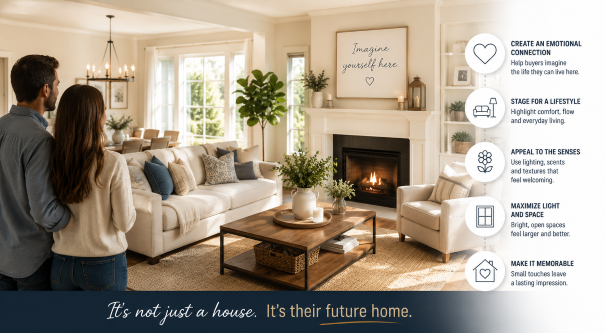
When a home isn’t getting the offers you expected, it’s rarely about price alone. More often, it’s because buyers aren’t feeling the connection they need to say “yes.” And that emotional connection is exactly what today’s sellers overlook.
If you want stronger showings, faster offers, and a smoother sale, emotional staging is your advantage. For more seller‑focused insights, explore our Real Estate Articles for Sellers —a helpful companion to the strategies below.
Buyers don’t buy with logic. They buy with imagination, desire, and the feeling of “this is the one.” Your job is to create that feeling the moment they step inside—and ideally, before they even reach the front door.
Why Emotional Staging Matters
Every buyer walks into a showing with one silent question: Can I see myself living here?
They’re not just evaluating square footage or finishes—they’re evaluating how the home makes them feel.
A warm, inviting space slows them down. A cold or empty space pushes them out.
That’s why emotional staging works. It transforms a house into a lifestyle. A layout into a story. A showing into an experience.
And when buyers feel that experience, they start mentally moving in long before they write the offer.
For more guidance on shaping the seller experience, visit our Articles for Buyers and Sellers and our curated How‑To Resources for Sellers.
What Sellers Miss
Most sellers assume the problem is price. But in many cases, the real issue is emotional flatness.
The home looks fine—but it doesn’t feel like anything. Buyers walk through, check the boxes, and leave without a spark.
That’s because sellers often stop at decluttering and depersonalizing. They remove the life from the home without replacing it with warmth, mood, or story.
The result is a space that feels more like a showroom than a sanctuary.
Emotional staging fills that gap. It adds subtle cues that help buyers imagine daily life—morning routines, cozy evenings, weekend gatherings, quiet moments. These cues are what make a home unforgettable.
Core Emotional Staging Tips
Emotional staging isn’t dramatic. It’s intentional, sensory, and strategic. Here’s how to create buyer chemistry that works instantly.
Use Warm, Layered Lighting
Swap harsh overhead bulbs for warm‑tone lamps, sconces, and soft accent lighting. Light is one of the fastest ways to shift a room’s emotional temperature from “cold” to “inviting.”
Add Textures That Invite Touch
Think plush throws, soft rugs, woven baskets, linen pillows, and natural fibers. Texture creates comfort—and comfort creates connection.
Tell Micro‑Stories in Every Room
These small, intentional setups help buyers imagine life in the home:
- A tray with two mugs and a teapot in the kitchen → “morning ritual”
- A cushioned bench by a window → “reading nook”
- A board game on the coffee table → “family night”
These aren’t decorations—they’re emotional anchors.
Highlight Lifestyle, Not Just Layout
Set the dining table casually. Place a robe on a bathroom hook. Add a dog bowl near the back door. These universal cues make the home feel lived‑in (in the best way) without feeling personal.
Stage for the Senses
When buyers feel good, they buy. Sensory staging is one of the most powerful emotional tools you have.
Scent
Use subtle, natural scents like vanilla, lavender, or fresh linen. Avoid strong air fresheners—they feel artificial and distracting.
Sound
Soft background music—acoustic guitar, light jazz, or piano—creates calm and encourages buyers to linger.
Touch
Incorporate textures that invite interaction: velvety throws, plush cushions, soft blankets. These tactile cues translate into emotional comfort.
Sight
Clean lines, intentional color palettes, and uncluttered surfaces create visual balance. A visually calm space feels emotionally calm.
Make Buyers Fall in Love
One of the biggest mistakes sellers make is stripping away too much personality. You don’t want a sterile space—you want a relatable one.
Here’s how to strike the balance:
- Remove personal photos, but keep décor that reflects warmth and style.
- Use neutral colors, but layer textures and soft patterns to avoid flatness.
- Keep universal lifestyle cues that help buyers imagine themselves living there.
Buyers should walk in and think, “This feels like home.” That reaction isn’t about price—it’s about chemistry.
For more ways to strengthen your listing, explore our guides on Real Estate Tips for Selling and Increasing the Value of Your Home.
📥 Download Your Free Checklist
Want a simple, actionable version of these tips? Download our free checklist:
“10 Emotional Home Selling Tips That Make Buyers Fall in Love”
- Subtle Staging Techniques
- Emotional Triggers That Sell
- Tips That Make Your Home Feel Like “The One”
Emotional Staging FAQ
What is emotional home staging?
Emotional staging uses lighting, texture, scent, and subtle lifestyle cues to help buyers form an instant connection with your home. It goes beyond decluttering and focuses on how the space makes buyers feel.
Why does emotional staging matter when selling a home?
Buyers make decisions emotionally first and logically second. When a home feels warm, inviting, and relatable, buyers stay longer, imagine themselves living there, and make stronger offers.
Does emotional staging work in a hot market?
Yes. Even in competitive markets, emotional staging helps your home stand out, increases perceived value, and can lead to faster sales and multiple offers.
What are the easiest emotional staging changes I can make?
Start with warm lighting, layered textures, subtle scent, and simple lifestyle vignettes—like a cozy reading nook or a softly set dining table. These small touches create big emotional impact.
Closing Thoughts
Selling a home isn’t just a checklist. It’s a moment in your life — a transition, a handoff, a fresh start waiting on the other side. And when the process feels stuck or uncertain, it’s easy to wonder what you’re missing.
Most of the time, it isn’t the price. It’s the feeling. Buyers want to walk in and sense warmth, comfort, possibility — that quiet “yes” that settles in before they even realize it.
That’s what emotional staging does. It softens the space. It slows people down. It helps them imagine mornings, routines, celebrations, and the small moments that make a house feel like home.
You don’t need dramatic changes. Just intentional ones. A little light. A little texture. A little story. Small moves that shift the entire experience.
When buyers feel that connection, everything else gets easier — the showings, the feedback, the offers. Because they’re not just buying a property. They’re buying the life they can see themselves living inside it.
Next Steps for Sellers Ready to Strengthen Their Home’s Appeal



A few tweaks.
A clearer story. And suddenly,
Emotional Home Staging Tips That Make Buyers Fall in Love with Your Property start working in your favor.
Home > Real Estate Articles >> Real Estate Seller Articles >> Buyer Chemistry: How to Make Homebuyers Fall in Love with Your Property
🔥Top Pages in August 2026

💌 Expired Listing Letters →
Send the message that gets sellers calling you back
📝 Email Marketing for Real Estate Agents →
Send emails that spark replies and start real conversations
🏷️ Real Estate Agent Directory →
Get discovered by buyers, sellers, and referral partners searching for agents
🏷️Real Estate Marketing Talk Blog →
Get fresh ideas that help agents grow, connect, and win more business
📬Real Estate Website Content →
Simple System. Uncommon Results.
🚪 Your Gateway to Targeted Insights

👔 For Agents →
Branding tips, lead gen strategies & marketing tools to grow your business
🏡 For Buyers → Smart buying guides, market insights & negotiation tips for your next move
📦 For Sellers → Listing prep, pricing strategies & proven tactics to sell fast and profitably
💰 For Investors → ROI-focused content, property analysis tools & market trend breakdowns