Real Estate Website Content Strategy: Turn Traffic into Leads with Smart Content and Design

A simple hub-and-article structure turns everyday traffic into steady leads.
Real estate website content strategy isn’t about posting random blog articles and hoping Google sends traffic. It’s about building a clean, intentional system where every page has a job, every article answers a question, and every design choice points visitors toward one action: becoming your lead.
Think of your site like a well-staged listing. The layout guides people naturally from room to room. Nothing feels cluttered. Nothing feels confusing. The path is obvious. That’s exactly how your content should work. Smart structure + useful information + simple design = trust, clicks, and inquiries.
If you’re tired of “getting traffic but not leads,” this page will help you fix the disconnect. We’ll keep it simple, tactical, and easy to implement so you can improve your site this week—not six months from now.
Bottom line: If you publish one focused page a week using this structure, your site can start generating leads consistently within a few months.
Why Strategy Matters (And Why Most Agent Websites Quietly Fail)
Most real estate websites don’t have a traffic problem. They have a clarity problem.
Pages exist with no purpose. Blog posts are written with no keyword. Design elements compete for attention. Visitors land… look around… and leave. Not because you’re not good at what you do — but because nothing clearly guides them to the next step.
A strong real estate website content strategy fixes this by giving every page a job:
- Hub pages attract broad search traffic
- T3 articles answer specific questions
- Lead magnets capture emails
- Design elements point visitors toward action
Instead of “publishing content,” you’re building a path. Visitors move naturally from Google → article → trust → download → follow-up → client.
To strengthen that pathway even further, make sure your site is supported by solid real estate SEO so the right buyers and sellers can actually find your best content.
When strategy comes first, everything gets easier. Your writing becomes focused. Your layout gets cleaner. Your calls-to-action feel natural. And your site starts behaving less like a brochure… and more like a quiet, 24/7 lead machine working in the background.
Smart Site Structure: Build Once, Let Google and Visitors Flow Naturally
If your content is scattered, your results will be scattered.
The highest-performing real estate sites aren’t complicated — they’re organized. They follow a simple hierarchy that both search engines and humans instantly understand. When your structure is clear, Google ranks you faster and visitors stay longer because everything “just makes sense.”
Think in layers, not random pages.
The Simple 3-Level Layout That Works
- T2 Hub Pages → big topics (Email Marketing, Flyers, Website Design, Leads, Buyers, Sellers)
- T3 Articles → specific questions and how-to guides
- Lead magnets or tools → checklists, PDFs, templates, downloads
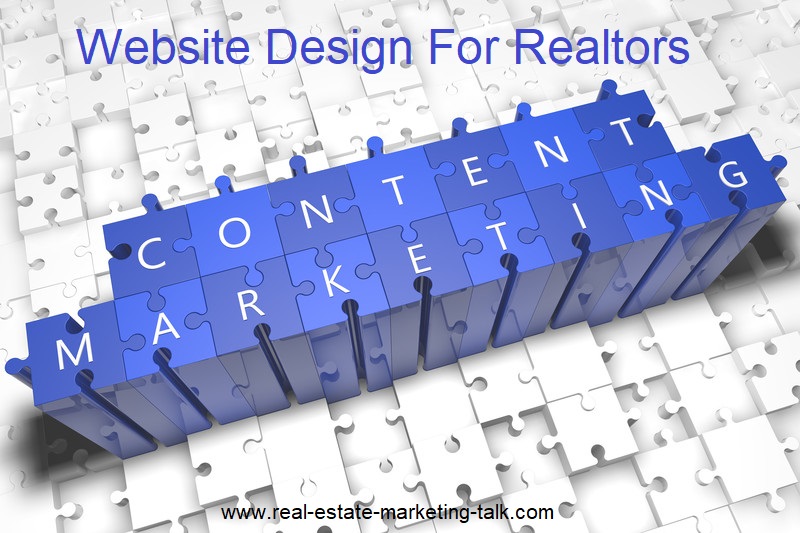
Each T3 article supports its hub, like our Website Design for Realtors hub page , where related topics live together and guide visitors deeper into your site. . Each hub links back to related articles. And every page gently offers something helpful in exchange for an email. That’s the engine.
For example:
- Visitor searches “real estate website ideas”
- They land on one article
- They see 3–6 related pages
- They download a checklist
- You now have a subscriber instead of a bounce
That’s not luck. That’s structure.
Quick Wins You Can Implement Today
- Group similar articles under one clear hub page
- Add related links at the bottom of every article
- Keep navigation simple (don’t overwhelm with menus)
- Use consistent formatting across all pages
- Create one clear CTA per page (not five)
Clean structure builds trust fast. Visitors subconsciously feel like they’re in the right place — and when people feel comfortable, they convert.
Bottom line: don’t build pages. Build pathways.
Content That Converts: Stop Writing “Info” and Start Creating Decisions
Here’s a simple truth: information alone doesn’t generate leads. Direction does.
A lot of agents write content that explains things… but never guides the reader anywhere. The visitor learns something useful and then leaves. No click. No opt-in. No next step.
High-converting content does two things at the same time:
- Solves a specific problem
- Points to the next logical action
That second part is where most websites quietly lose money.
Write With Intent, Not Volume
Every article should target one clear search phrase and one clear outcome. Not three topics. Not ten ideas. One.
- “How to create a free printable flyer” → offer a flyer template
- “Email marketing for agents” → offer an email swipe file
- “Website design tips” → offer a checklist or guide
When the upgrade matches the topic, conversions jump because it feels natural, not salesy.
Use This Simple Page Formula
- Hook → show you understand their problem
- Steps or tips → give practical guidance
- Proof or examples → build trust
- Soft CTA → offer something helpful
That’s it. No fancy copywriting tricks required. Just clarity and usefulness.
Also remember: shorter paragraphs win. Bullet points win. Subheads win. Most visitors skim first and read second. Make it easy for their eyes to move down the page without friction.
When your content feels quick, helpful, and actionable, readers start thinking, “If this free stuff is this good… what else do they have?” That’s when subscribers turn into buyers and buyers turn into clients.
Create content that nudges decisions — not just page views.
Design That Guides Action: Make the Next Step Obvious
Good design isn’t decoration. It’s direction.
Your website shouldn’t look flashy or complicated. It should feel effortless. Visitors shouldn’t have to “figure out” what to do next. The path should be so clear it almost feels automatic.
That’s the difference between a pretty site and a lead-generating site.
Think Flow, Not Features
Every page should quietly answer three questions:
- Where am I?
- What is this about?
- What should I do next?
If those answers aren’t obvious in five seconds, people leave. Not because your content is bad — because friction kills momentum.
Simple Design Tweaks That Increase Conversions Fast
- Use clear headlines (say exactly what the page is about)
- Keep plenty of white space (don’t cram text)
- Use consistent fonts and layout site-wide
- Limit each page to one primary CTA
- Place links and buttons where eyes naturally land (top, middle, bottom)
- Use subtle callout boxes only when something truly matters
Consistency builds trust. When every page looks and feels similar, visitors subconsciously relax. They stay longer. They click more. They engage more.
Remember This Rule
If everything is highlighted… nothing is important.
Resist the urge to add banners, pop-ups, buttons, and flashing elements everywhere. Instead, guide people calmly from section to section like a helpful tour guide. Smooth beats loud every time.
The goal isn’t to impress visitors. The goal is to make saying “yes” feel easy.
Simple Weekly Plan: How to Build Your Real Estate Website Content Strategy Without Burnout
You don’t need 100 pages tomorrow. You need steady, consistent momentum.
The agents who win online aren’t publishing nonstop. They’re simply showing up every week with focused, useful content that compounds over time. One strong page today can bring traffic for years. Stack enough of those, and your site becomes an asset that works while you sleep.
Keep it boring. Keep it repeatable. Keep it simple.
The 5-Step Weekly System
- Pick one keyword → a real question buyers, sellers, or agents are searching
- Create one helpful T3 article → 800–1,000 words, skimmable and practical
- Link it to its hub page → strengthen your structure
- Add one lead magnet or soft CTA → checklist, guide, template, or download
- Interlink 2–3 older pages → boost SEO and time on site
That’s it. One focused page per week equals 52 new lead opportunities a year. Do that for two or three years and suddenly you’re sitting on hundreds of targeted entry points pulling in traffic from Google daily.
This is how small, quiet websites turn into big, dependable lead machines.
What to Expect
- Month 1 → foundation
- Month 3 → early traffic
- Month 6 → consistent opt-ins
- Month 12 → compounding results
It’s not flashy. It’s not instant. But it’s predictable — and predictable beats random marketing every time.
If you stick with this system, your website stops feeling like a chore and starts feeling like a business partner that brings you warm prospects on autopilot.
Ready to tighten up your layout and structure next? Visit the hub for more practical ideas and design tips: Website Design for Realtors
Next Steps to Grow Your Website

Home > Website Design for Realtors > Real Estate Website Content Strategy
🔥Top Pages in July 2026

💌 Real Estate Marketing Talk Home Page→
Timely Strategies and Resources for Agents | Buyers, Sellers and Investors!
📝 Expired Listing Postcards →
Ideas That Flip the Script on Agent Visibility
🏷️How to Get Expired Real Estate Leads Without Cold Calling →
Create a system where expired listing owners call you first
📬Farming Expired Listings →
Simple System. Uncommon Results.
🏷️ Real Estate Agent Directory →
Magnetic Taglines That Pull Clients Toward You Instantly
🚪 Your Gateway to Targeted Insights

👔 For Agents →
Branding tips, lead gen strategies & marketing tools to grow your business
🏡 For Buyers → Smart buying guides, market insights & negotiation tips for your next move
📦 For Sellers → Listing prep, pricing strategies & proven tactics to sell fast and profitably
💰 For Investors → ROI-focused content, property analysis tools & market trend breakdowns