Home Improvement Contract Checklist: What to Include Before You Hire a Contractor
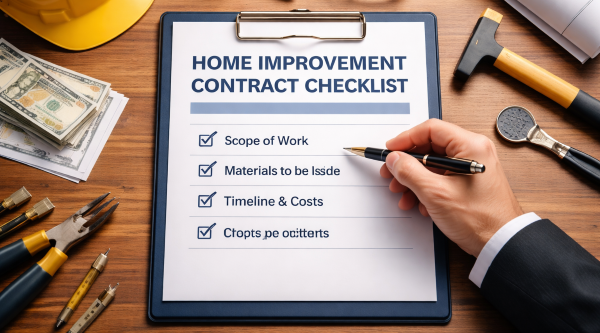
Before you hire a contractor, this home improvement contract checklist helps you avoid confusion, control costs, and protect your investment.
Why Verbal Agreements No Longer Work
There was a time when a handshake meant everything. Today, that approach can cost you—financially and legally.
Even when both parties act in good faith, misunderstandings happen. One person explains. The other interprets. Somewhere in between, expectations shift—and when money is involved, those gaps become expensive.
This is especially true for homeowners preparing to buy or renovate, where overlooked details can carry forward into long-term ownership costs. If you're navigating that process, understanding what to know before buying a house can help you avoid similar pitfalls early.
And then there’s the harsher reality—bad actors. Without a written agreement, disputes quickly turn into “he said, she said” situations that often end in court.
Clarity Creates Control
A written contract does more than protect you—it brings clarity to the entire project.
Before speaking with a contractor, define exactly what you want. Not loosely. Specifically.
What Should Be Clearly Defined
- Scope of work
- Materials to be used
- Items that stay vs. items that go
- Cleanup responsibilities
- Timeline expectations
- Total cost and payment structure
This level of detail becomes just as important when preparing a home for sale. Sellers who clearly define property inclusions and exclusions ahead of time often avoid last-minute disputes. If you're planning to list, these home selling tips and strategies can help you stay one step ahead.
Why This Matters More Than You Think
Contractors are not mind readers. What seems obvious to you may not be obvious to them.
The clearer your vision is on paper, the more likely it is to be executed correctly—whether you're improving a home you plan to live in or preparing it for market. In fact, many of the same principles apply when reviewing agreements during the real estate closing process, where details matter just as much.
The Hidden Costs Most People Miss
Many homeowners are drawn in by phrases like “free estimate” or “no-cost consultation.”
But very little in this process is truly free.
Understanding Contractor Pricing
Every contract typically includes more than just the visible work:
- Time spent evaluating the project
- Administrative and planning costs
- Business overhead
- Contingency buffers for unexpected issues
The less defined your project is upfront, the more padding gets built into the estimate.
This same concept shows up in real estate transactions as well—where unclear expectations can lead to pricing adjustments, repairs, or renegotiations. Buyers who understand these moving parts tend to make stronger decisions, especially when reviewing real estate articles for buyers and sellers that break down these cost factors.
Common Contract Mistakes to Avoid
Many homeowners don’t run into trouble because of bad contractors—they run into trouble because of unclear agreements.
- Vague descriptions of work that leave room for interpretation
- No written timeline or completion benchmarks
- Payment schedules that aren’t tied to progress
- Missing details about materials or substitutions
- No process defined for handling changes or unexpected issues
These gaps may seem minor at the start, but they often lead to delays, added costs, and frustration once the project is underway.
The more specific your contract is upfront, the fewer decisions you’ll be forced to make under pressure later.
Negotiation Happens Before the Signature
A contract should never feel rushed.
Once your expectations are documented, the contractor may suggest adjustments, raise questions, or recommend alternatives. This is where refinement happens.
The Smart Approach
Review everything carefully. Ask questions. Clarify anything that feels vague.
Because once both parties sign, the document becomes the standard everything is measured against.
And at that point, flexibility disappears.
The Bottom Line
Putting everything in writing isn’t about distrust—it’s about alignment.
A strong contract protects your investment, sets expectations, and creates a clear path from start to finish. Without it, you’re relying on memory, interpretation, and assumption. With it, you’re operating from clarity, structure, and control.
If you're using this checklist as part of a flip or investment project, see Flipping Real Estate for strategy, deal flow, and profit planning, and Fix and Flip Freedom for a real‑world example of how smart planning and contractor management shape a successful flip.
More about buying and selling real estate



Home > Real Estate Articles >> Real Estate Articles for Buyers and Sellers >> Home Improvement Contract Checklist
Define the job. Control the outcome.
Use a home improvement contract checklist.
Home > Real Estate Articles >> Real Estate Articles for Buyers and Sellers >> Home Improvement Contract Checklist
🔥Top Pages in July 2026

💌 Real Estate Marketing Talk Home Page→
Timely Strategies and Resources for Agents | Buyers, Sellers and Investors!
📝 Expired Listing Postcards →
Ideas That Flip the Script on Agent Visibility
🏷️How to Get Expired Real Estate Leads Without Cold Calling →
Create a system where expired listing owners call you first
📬Farming Expired Listings →
Simple System. Uncommon Results.
🏷️ Real Estate Agent Directory →
Magnetic Taglines That Pull Clients Toward You Instantly
🚪 Your Gateway to Targeted Insights

👔 For Agents →
Branding tips, lead gen strategies & marketing tools to grow your business
🏡 For Buyers → Smart buying guides, market insights & negotiation tips for your next move
📦 For Sellers → Listing prep, pricing strategies & proven tactics to sell fast and profitably
💰 For Investors → ROI-focused content, property analysis tools & market trend breakdowns