How to Avoid Scams in Rent to Own Agreement
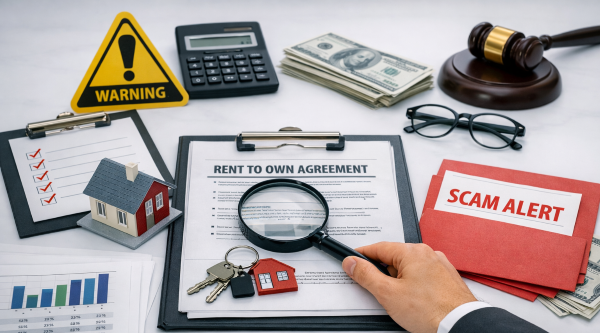
The Dark Side of a Creative Strategy
Rent to own agreements can open doors for buyers who might otherwise be locked out of homeownership. But where opportunity exists, so does exploitation. The rent to own niche has attracted scammers who prey on hopeful buyers and inexperienced sellers. The good news? With the right knowledge and due diligence, you can protect yourself from falling into a costly trap.
If you want a broader foundation before diving into the details, start with the real estate articles for buyers and sellers page for context on how these agreements fit into the bigger picture.
Common Rent to Own Scams
Phantom properties
In a phantom property scam, the “seller” doesn’t actually own the home they are offering. They collect option fees and rent, then disappear when the truth surfaces. A quick ownership check could have prevented the loss.
Unrealistic promises
Scammers often promise guaranteed approval, instant credit repair, or rock-bottom prices that don’t match the local market. When the pitch sounds too good to be true, it usually is.
Hidden clauses
Some contracts bury harsh penalties, one-sided terms, or conditions that make it nearly impossible for the buyer to ever exercise the option. If you don’t understand every clause, you’re not ready to sign.
Inflated option fees
Legitimate option fees are meaningful but reasonable. Scammers push excessively high, non-refundable fees that leave buyers with nothing if the deal falls apart.
Title troubles
In some scams, the seller has liens, unpaid taxes, or no clear title at all. The buyer pays faithfully, only to discover the home can’t be transferred cleanly.
For more on how poor decisions compound risk, the Common Mistakes to Avoid in Rent to Own Homes Guide is a useful companion read.
Red Flags Buyers Should Watch For
No detailed written contract
If everything is “handshake only” or the seller resists putting terms in writing, walk away. A legitimate rent to own agreement should be clear, detailed, and reviewable.
Pressure to sign quickly
High-pressure tactics—“sign today or lose the deal”—are a classic scam signal. Real opportunities can withstand a reasonable review period.
Refusal to allow a home inspection
When a seller blocks inspections, they may be hiding serious defects. A proper inspection protects your future budget and safety.
Cash-only payments with no receipts
Insisting on cash with no receipts or records makes it easy for scammers to deny what you’ve paid. Always document every transaction.
Unusually high option fees
Option fees that are far above local norms can be a sign that the seller expects the deal to fail—and plans to keep your money.
If you’re wondering what happens when deals go off the rails, the What Happens if You Break a Rent to Own Contract Guide explains the consequences clearly.
Red Flags Sellers Should Watch For
Prospects who resist background checks
Serious tenant-buyers understand that screening protects everyone. Pushback on credit checks, references, or income verification is a warning sign.
Unverifiable income
If pay stubs, employment letters, or bank statements don’t add up, pause. You need reliable income documentation before entering a long-term agreement.
Demands for unrealistic credits
Requests for excessive rent credits or deep discounts that don’t match the market can signal a buyer who is not aligned with reality—or your financial safety.
Attempts to alter contracts after signing
When a tenant-buyer repeatedly pushes to change key terms after the ink is dry, it can be a sign of future conflict or non-compliance.
How to Protect Yourself as a Buyer
Hire a real estate attorney
An experienced real estate attorney can review the agreement, explain your obligations, and flag unfair or dangerous clauses before you commit.
Verify ownership and clear title
Confirm that the seller truly owns the property and that there are no liens or title issues that could block a future sale.
Get a home inspection
A professional inspection reveals structural, mechanical, and safety issues that could cost you thousands later.
Check market rents and fees
Compare the proposed rent and option fee to local market data. Extreme outliers deserve extra scrutiny.
Keep a paper trail
Save contracts, receipts, emails, and texts. Documentation is your best defense if disputes arise.
If financing is part of your long-term plan, the Can You Get Financing After a Rent to Own Agreement Guide can help you think ahead.
How to Protect Yourself as a Seller
Screen tenants thoroughly
Run credit checks, verify employment, and check references. A strong screening process reduces default risk and protects your asset.
Use escrow accounts
Handling option fees and certain payments through escrow adds a layer of transparency and professionalism.
Define responsibilities in writing
Spell out who handles repairs, taxes, insurance, and utilities. Clear expectations prevent misunderstandings later.
Work with professionals
Attorneys, real estate agents, and accountants can help you structure agreements that are fair, compliant, and enforceable.
Monitor compliance during the lease
Track payments, inspections, and maintenance. Address issues early before they become major problems.
When in Doubt, Walk Away
If the deal feels rushed, one-sided, or too good to be true, it probably is. Legitimate rent to own opportunities can withstand questions, due diligence, and professional review.
For a broader perspective on where rent to own fits among other strategies, you can explore additional real estate articles across the site.
Conclusion: Knowledge Is Your Best Defense
Scammers rely on desperation and ignorance; they lose their power when buyers and sellers know what to watch for. With research, legal guidance, and patience, you can separate real opportunity from risky promises.
Next Guides to Explore

Avoid scams in rent to own agreements.
Ask questions. Verify everything. Protect your future.
Home > Real Estate Articles >> Real Estate Articles for Buyers and Sellers >> How to Avoid Scams in Rent to Own Agreement
🔥Top Pages in August 2026

💌 Expired Listing Letters →
Send the message that gets sellers calling you back
📝 Email Marketing for Real Estate Agents →
Send emails that spark replies and start real conversations
🏷️ Real Estate Agent Directory →
Get discovered by buyers, sellers, and referral partners searching for agents
🏷️Real Estate Marketing Talk Blog →
Get fresh ideas that help agents grow, connect, and win more business
📬Real Estate Website Content →
Simple System. Uncommon Results.
🚪 Your Gateway to Targeted Insights

👔 For Agents →
Branding tips, lead gen strategies & marketing tools to grow your business
🏡 For Buyers → Smart buying guides, market insights & negotiation tips for your next move
📦 For Sellers → Listing prep, pricing strategies & proven tactics to sell fast and profitably
💰 For Investors → ROI-focused content, property analysis tools & market trend breakdowns