Real Estate Branding Examples That Actually Work
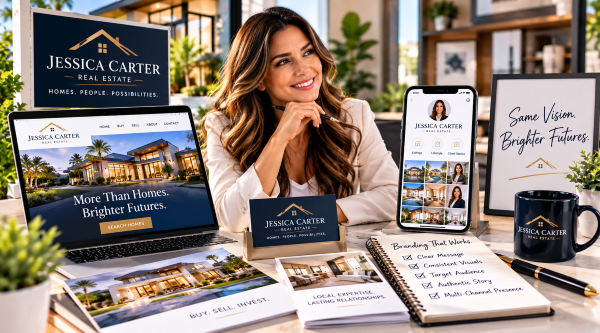
Branding can feel abstract until you see it in action. Real examples show how visuals, messaging, tone, and consistency work together to create a brand clients trust. When agents see branding done well, they understand how each element supports the others — and how a strong brand becomes a competitive advantage.
Examples also help agents recognize what’s missing in their own branding. A clear, confident brand stands out immediately. A weak or scattered brand blends into the background. Seeing the difference helps agents make better decisions about their own marketing.
Strong Visual Branding Makes Your Business Instantly Recognizable
Visual branding is often the first thing clients notice. When your visuals are clean, consistent, and aligned with your personality, clients feel confident about your professionalism. Below are examples of visual branding that works — and why it works.
Example: A Clean, Modern Logo
A simple, modern logo communicates confidence and professionalism. It’s easy to recognize, easy to remember, and easy to use across marketing materials. Strong logos avoid clutter and rely on clear shapes and intentional color choices.
Example: A Consistent Color Palette
Agents who use the same colors across their website, postcards, social media, and signage create instant recognition. When clients see those colors repeatedly, they associate them with your brand — even before they see your name.
Example: Professional Photography
High‑quality photos elevate your brand. Whether it’s your headshot, listing photos, or lifestyle imagery, professional visuals communicate care, attention, and credibility. Strong brands avoid blurry, dark, or inconsistent images.
Clear Messaging Helps Clients immediately Understand Your Value
Messaging is the backbone of your brand. When your message is clear, clients know exactly who you are and what you stand for. Strong messaging examples show how clarity builds trust and makes your marketing more effective.
Example: A Focused Core Message
Agents with a clear core message — such as “Helping first‑time buyers feel confident” — create marketing that feels aligned and intentional. Every slogan, tagline, and campaign supports that message, making the brand stronger.
Example: A Specific Slogan
Slogans that communicate a specific benefit resonate more than generic phrases. For example, “Guiding You Through Your First Home Purchase” speaks directly to a target audience and communicates a clear promise.
Example: Messaging That Matches the Market
Agents who work with luxury clients use messaging that feels refined and confident. Agents who work with investors use messaging that feels strategic and data‑driven. Strong brands match their message to their audience.
Strong Tone and Voice Make Your Brand Feel Authentic
Your tone is how your brand sounds. When your tone matches your personality and your audience, clients feel connected to your message. Strong tone and voice examples show how authenticity builds trust.
Example: A Warm, Reassuring Tone
Agents who work with nervous first‑time buyers often use a calm, supportive tone. Their messaging feels friendly, patient, and encouraging — helping clients feel safe and understood.
Example: A Confident, Direct Tone
Agents who work with luxury clients or investors often use a more direct, polished tone. Their messaging feels decisive, knowledgeable, and strategic — reinforcing their expertise.
Example: Tone Consistency Across Platforms
Strong brands use the same tone on their website, social media, emails, and print materials. When the tone shifts too much, clients feel unsure about the brand’s identity. Consistency builds trust.
Brand Consistency Builds Recognition
Consistency is one of the most powerful parts of branding. When your visuals, messaging, and tone stay aligned across your marketing, clients recognize your brand instantly. Strong consistency examples show how repetition builds trust.
Example: Unified Social Media Templates
Agents who use consistent templates for their posts create a recognizable style. Clients can spot their content immediately — even before seeing the name or logo.
Example: Matching Website and Print Materials
When your website, postcards, flyers, and business cards share the same colors, fonts, and tone, your brand feels stable and professional. This alignment strengthens your identity.
Example: Repeating Your Core Message
Strong brands repeat their core message across campaigns. This repetition helps clients remember who you are and what you stand for — making your brand more memorable.
Brand Alignment Makes Your Marketing More Effective
Brand alignment is the connection between your visuals, messaging, tone, and audience. When these elements work together, your brand feels intentional and powerful. Strong alignment examples show how clarity creates momentum.
Example: A Brand Built Around Strengths
Agents who build their brand around their natural strengths — such as negotiation, education, or community involvement — create marketing that feels authentic and confident.
Example: A Brand That Matches the Market
Agents who work in urban markets often use modern, bold visuals. Agents in rural markets may use warmer, more personal visuals. Strong brands match their identity to their environment.
Example: A Brand That Supports Long‑Term Growth
Agents with aligned branding can scale their marketing more easily. Their visuals, messaging, and tone work together across new platforms, new campaigns, and new audiences.
Final Thoughts
Real estate branding becomes clearer when you see it in action. Strong examples show how visuals, messaging, tone, and consistency work together to create a brand clients trust. When your branding is aligned and intentional, your marketing becomes more effective — and your business becomes more memorable.
More Agent Resources
- 316 Real Estate Marketing Slogans
- How to Choose a Real Estate Slogan
- Slogans vs. Taglines
- Real Estate Branding Blueprint
- Real Estate Branding Tips for New Agents
Continue Building Your Brand


Home > Real Estate Marketing Slogans >> Real Estate Branding Examples That Actually Work
🔥Top Pages in August 2026

💌 Expired Listing Letters →
Send the message that gets sellers calling you back
📝 Email Marketing for Real Estate Agents →
Send emails that spark replies and start real conversations
🏷️ Real Estate Agent Directory →
Get discovered by buyers, sellers, and referral partners searching for agents
🏷️Real Estate Marketing Talk Blog →
Get fresh ideas that help agents grow, connect, and win more business
📬Real Estate Website Content →
Simple System. Uncommon Results.
🚪 Your Gateway to Targeted Insights

👔 For Agents →
Branding tips, lead gen strategies & marketing tools to grow your business
🏡 For Buyers → Smart buying guides, market insights & negotiation tips for your next move
📦 For Sellers → Listing prep, pricing strategies & proven tactics to sell fast and profitably
💰 For Investors → ROI-focused content, property analysis tools & market trend breakdowns