Should You Convert Your Dining Room to a Bedroom? Pros, Cons, and Market Impact
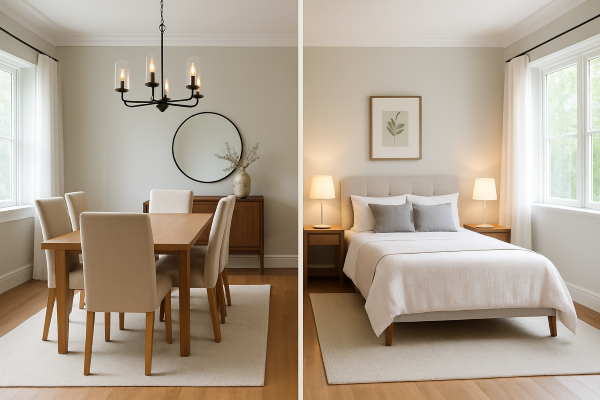 A before-and-after comparison of a dining-room-to-bedroom conversion in action.
This single question sits at the center of a debate that splits homeowners—and occasionally even real estate pros. Some insist you should follow your needs and convert the space. Others warn that removing a formal dining room can sabotage your layout and weaken resale value. The truth, as usual, lives somewhere between the extremes. The impact of turning a dining room into a bedroom depends on your market, your home’s layout, and buyer expectations in your area. Before swinging a hammer, it’s worth exploring how this remodel can help, hinder, or completely reshape the long-term value of your home.
Convert Dining Room to Bedroom: Does It Hurt Resale Value?
See more common real estate questions homeowners ask
Here’s where the conversation gets interesting. Converting a dining room into a bedroom can hurt resale value—but it can also help it. It all depends on how buyers in your market think. In some homes, removing a formal dining room feels like eliminating a traditional anchor of the floor plan. Buyers who love hosting holidays, dinners, or family gatherings may see the loss as a major drawback.
But in other markets—especially in family-focused areas—buyers care far more about bedroom count than formal rooms they’ll use twice a year. In those neighborhoods, a fourth bedroom may actually make your house more competitive. The real question isn’t whether you want the bedroom. It’s whether the next buyer is likely to feel the same way.
If the conversion looks forced, disrupts the home’s natural flow, or sacrifices privacy, resale value can suffer. But when the room blends naturally into the home’s layout and meets real buyer demand, the impact may be neutral—or even positive.
Dining Room to Bedroom Conversion Ideas: What Matters Most
Before grabbing a hammer, take a slow walk through your home with a buyer’s eye—because their opinion will ultimately determine your resale value. Dining rooms are usually located near busy communal areas, which can make a converted bedroom feel exposed or inconvenient if not planned well.
Ask yourself a few critical questions:
- Will the new bedroom feel private, or will someone have to walk across high-traffic areas to reach a bathroom?
- Does the room already have a proper door, closet, and legal egress?
- Will new walls or doors look intentional—or painfully obvious?
- Will the conversion interrupt your home’s natural traffic flow?
Traffic flow is often the hidden deal-breaker. A home can have flawless finishes and still leave buyers uncomfortable if movement between rooms feels cramped, confusing, or unnatural. Buyers forgive outdated finishes more easily than awkward layouts.
Does Converting a Dining Room to a Bedroom Look “Right”?
This is where many dining-room-to-bedroom conversions fail. Even if the extra bedroom meets a practical need, buyers can immediately sense when something feels “off.” A bedroom should look like it was always meant to be there—not like a dining room that got walled off as an afterthought.
Here’s what often signals a forced conversion:
- Mismatched trim or door placement that doesn’t line up with the home’s architecture
- Proportions that feel too open, too narrow, or poorly suited for a bed layout
- A missing or undersized closet
- A door positioned directly off living or kitchen areas with little privacy
Buyers are highly sensitive to “visual harmony.” If the room doesn’t blend seamlessly with the home’s existing style and structure, it can send a message that the conversion was rushed or done solely to inflate bedroom count—something that rarely helps resale value.
Dining Room Conversion and Home Value: Check Your Local Market First
Before committing to a full dining-room-to-bedroom conversion, take a close look at what buyers in your area actually want. Real estate markets vary wildly from one neighborhood to the next. In some communities, a fourth bedroom is a major value booster. In others, the lack of a formal dining room can immediately shrink your buyer pool.
Here are the market signals to look for:
- Do nearby four-bedroom homes sell faster and at stronger prices than three-bedroom homes?
- Are most comparable homes retaining their formal dining rooms?
- Do MLS photos in your neighborhood emphasize gathering spaces or additional bedrooms?
- Are buyers in your market trending more traditional—or more flexible and modern?
A knowledgeable real estate agent can answer these questions quickly by reviewing recent sales data. If four-bedroom homes consistently outperform three-bedroom models in your area, that’s a strong sign your conversion may pay off. But if local buyers value a formal dining experience—holidays, gatherings, hosting—removing that space can be a hard sell.
Should You Convert Dining Room to Bedroom? Get Professional Eyes On It
This is one of those remodeling decisions where outside perspective is essential. Homeowners often view their space through the lens of personal needs, while buyers view it through the lens of functionality and flow. A quick walk-through by two or three real estate agents can provide clarity you might miss on your own.
When inviting an agent to preview your home, don’t announce your plans first. Let them react naturally to the layout, then ask:
- “If we converted this dining room into a bedroom, how would buyers respond?”
- “Would this layout feel natural—or forced?”
- “Would this help or hurt resale value in our neighborhood?”
One candid opinion can save you thousands of dollars and months of regret. When I sold one of my own homes, I learned firsthand how easy it is to overlook issues. I had mildew in a shower that I had mentally dismissed as minor. Out of every agent who previewed the property, only one had the courage to point it out directly. Their honesty convinced me to list with them—and they were absolutely right. Buyers notice things homeowners overlook.
The same principle applies here: sometimes your home needs a neutral, market-minded pair of eyes to tell you what the layout is really communicating.
Final Verdict: Is Converting a Dining Room to a Bedroom Worth It?
The truth is simple: converting a dining room into a bedroom is neither inherently good nor inherently bad. It’s a high-impact decision whose success depends entirely on your home’s layout, your neighborhood’s buyer expectations, and how naturally the new bedroom integrates into the existing floor plan.
Done well, a dining-room-to-bedroom conversion can improve your home’s daily usability and potentially increase its appeal to buyers who prioritize bedroom count. Done poorly, it can disrupt natural flow, reduce privacy, and signal that the home has been altered out of necessity rather than thoughtful design.
Before committing, weigh your personal needs against future buyer expectations. Look at comparable sales, get candid feedback from real estate professionals, and ask whether the new layout will feel like it has always belonged in the home. The strongest remodeling decisions strike a balance between what serves you today and what protects your resale value tomorrow.
Dining Room Conversion — FAQ
Does converting a dining room to a bedroom always hurt resale value?
Not always. In many markets, buyers prefer extra bedrooms. Problems arise when the new bedroom disrupts flow, privacy, or looks forced.
Will buyers accept a bedroom without a closet?
Often, yes. Some regions require closets, but buyers focus more on usability. Adding even a slim closet can help the room feel legitimate.
Is a hybrid dining/guest room safer than a full conversion?
Yes. French doors or partial walls keep dining flexibility while offering guest space—reducing resale risk.
What’s the biggest mistake homeowners make?
Ignoring traffic flow. Bedrooms that require crossing major living areas to reach a bathroom can feel awkward to buyers.
Should I pull permits for the conversion?
Yes. Permits protect resale value, satisfy appraisers, and prevent inspection issues. A contractor can confirm what’s required.
Other Questions Readers Ask
These quick-reference guides help buyers, sellers, and investors get clear answers fast:
- Practical how‑to answers buyers look for before making a move
- Straightforward guidance sellers rely on when preparing their home
- Clear, simple how‑to steps investors use to evaluate opportunities
Explore Related Real Estate Articles



Index > Real Estate Questions > Should You Convert Your Dining Room to a Bedroom
🔥Top Pages in August 2026

💌 Expired Listing Letters →
Send the message that gets sellers calling you back
📝 Email Marketing for Real Estate Agents →
Send emails that spark replies and start real conversations
🏷️ Real Estate Agent Directory →
Get discovered by buyers, sellers, and referral partners searching for agents
🏷️Real Estate Marketing Talk Blog →
Get fresh ideas that help agents grow, connect, and win more business
📬Real Estate Website Content →
Simple System. Uncommon Results.
🚪 Your Gateway to Targeted Insights

👔 For Agents →
Branding tips, lead gen strategies & marketing tools to grow your business
🏡 For Buyers → Smart buying guides, market insights & negotiation tips for your next move
📦 For Sellers → Listing prep, pricing strategies & proven tactics to sell fast and profitably
💰 For Investors → ROI-focused content, property analysis tools & market trend breakdowns