Fix and Flip Field Guide — Evaluate Deals with Confidence
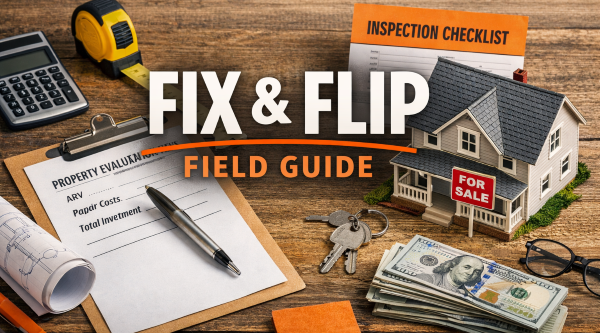
Fix and flip field guide thinking starts before the offer—long before numbers are finalized or contractors are called. Most deals don’t fall apart because the opportunity wasn’t there. They fall apart because the evaluation wasn’t clear, the scope wasn’t tight, or the numbers were based on assumptions instead of structure.
If you’ve been exploring opportunities through finding foreclosure deals or reviewing REO foreclosures, you already know that the opportunity is only part of the equation. The real advantage comes from how you evaluate what’s in front of you.
If you're stepping into this space for the first time, it helps to understand how these opportunities fit into the bigger picture. This foreclosures guide breaks down how properties move through the process—and where the best opportunities tend to appear.
What This Guide Helps You Do
The purpose of this fix and flip field guide is simple: bring clarity to a process that often feels rushed. When you have a structure to follow, decisions become easier—and mistakes become less likely.
- Evaluate deals with a consistent framework
- Avoid overpaying based on incomplete assumptions
- Identify red flags before they become expensive problems
- Move forward with more confidence and less hesitation
For a broader overview of flipping strategy and opportunity discovery, visit our Flipping Real Estate Hub Page. It provides the big‑picture context this field guide builds on.
And if you want to see how these principles play out in a real deal, explore Fix and Flip Freedom — a story that shows exactly how one flip can change everything.
What’s Inside
This isn’t theory—it’s practical. Each part of the guide is designed to help you think more clearly about the numbers, the property, and the decisions ahead.
- ARV & repair math worksheet — Understand the relationship between purchase price, renovation cost, and potential value
- Inspection red-flag checklist — Spot issues early, before they change your numbers
- Funding overview — Compare options like hard money, partnerships, and HELOCs
- Timeline template — Stay organized from acquisition through completion
Each piece supports the same goal: making better decisions with fewer surprises.
A Simple Deal Evaluation Walkthrough
Let’s say you come across a property that looks promising. The price seems reasonable, the location works, and the photos suggest it needs “light updates.”
This is where many decisions get rushed.
Instead of relying on instinct, the goal is to walk through the deal step by step:
- Estimate the after-repair value (ARV) based on comparable properties
- Break down realistic repair costs—not just surface improvements
- Factor in holding costs, timelines, and unexpected delays
- Compare your total investment against potential resale value
On the surface, the deal might still look good. But with structure, you begin to see the margins more clearly—and whether they actually support the risk.
This is where many deals quietly fall apart. And that’s not a bad thing. It’s a filter.
The more consistently you apply this kind of thinking, the easier it becomes to recognize which opportunities are worth pursuing—and which ones to pass on.
To expand your deal‑evaluation toolkit even further, explore Real Estate Investor Resources — a collection of analysis tools and insights that support smarter investing decisions.
Who This Is For
This guide is designed for people who want to approach deals with a little more structure and a little less guesswork.
- New investors learning how to evaluate opportunities
- Agents working with buyers interested in investment properties
- Buyers exploring fix-and-flip strategies for the first time
You don’t need to be an expert. You just need a framework you can rely on.
When to Use It
Timing matters. The value of this guide comes from using it before decisions are locked in.
- Before making an offer
- During property walkthroughs
- When comparing multiple opportunities
- Before committing to a renovation scope
If you’re actively reviewing deals—especially while learning how to buy foreclosures—this guide becomes even more useful. It helps connect the opportunity with the execution.
How This Fits Into Your Investment Strategy
Finding opportunities is one part of the process. Evaluating them correctly is what determines your outcome.
If you're actively exploring deals through how to find foreclosures or reviewing REO opportunities, this guide becomes the bridge between discovery and decision.
It helps you move from:
- “This looks like a good deal”
- to “I understand exactly how this deal works”
That shift is where better decisions are made.
Common Mistakes This Guide Helps You Avoid
Many deals look promising at first glance. The numbers seem to work. The property looks manageable. But small oversights can quickly turn a good opportunity into a frustrating experience.
- Underestimating repair costs or missing hidden issues
- Overestimating after-repair value (ARV)
- Forgetting holding costs, timelines, and delays
- Relying on rough estimates instead of structured evaluation
This guide helps you slow down just enough to catch these issues early—before they affect your bottom line.
Download the Fix & Flip Field Guide
A good opportunity deserves a clear evaluation. This guide is designed to help you think through deals before you commit—so you can move forward with more clarity, fewer surprises, and better outcomes.
Download the Fix & Flip Field Guide (PDF)
Over time, the goal isn’t just to find more deals—it’s to recognize better ones more quickly. A simple framework, used consistently, can make that possible.
Build Your Investment Approach

Home > Foreclosures >> Fix and Flip Field Guide
🔥Top Pages in July 2026

💌 Real Estate Marketing Talk Home Page→
Timely Strategies and Resources for Agents | Buyers, Sellers and Investors!
📝 Expired Listing Postcards →
Ideas That Flip the Script on Agent Visibility
🏷️How to Get Expired Real Estate Leads Without Cold Calling →
Create a system where expired listing owners call you first
📬Farming Expired Listings →
Simple System. Uncommon Results.
🏷️ Real Estate Agent Directory →
Magnetic Taglines That Pull Clients Toward You Instantly
🚪 Your Gateway to Targeted Insights

👔 For Agents →
Branding tips, lead gen strategies & marketing tools to grow your business
🏡 For Buyers → Smart buying guides, market insights & negotiation tips for your next move
📦 For Sellers → Listing prep, pricing strategies & proven tactics to sell fast and profitably
💰 For Investors → ROI-focused content, property analysis tools & market trend breakdowns