Pros and Cons of Rent to Own Homes for Buyers and Sellers

The Double-Edged Sword of Rent to Own
Rent to own homes often sound like the perfect solution: buyers gain a path to ownership without immediate financing, and sellers enjoy steady rent while lining up a buyer. But like any real estate strategy, the rent to own model carries both opportunities and risks. To make smart decisions, buyers and sellers alike need to understand the full picture—the good, the bad, and the gray areas in between.
For broader context on how these agreements fit into the housing market, explore the real estate articles for buyers and sellers page.
If you’re still weighing whether rent to own is right for you, the Is Rent to Own a Good Idea in Today’s Housing Market Guide offers a helpful overview.
The Pros for Buyers
Easier path to ownership
Rent to own gives buyers time to improve credit, save for a down payment, and transition into ownership gradually—without the pressure of immediate mortgage approval.
Locked-in purchase price
Buyers can secure a future purchase price at today’s values, protecting themselves if the market rises during the lease term.
Building equity through rent credits
Part of each monthly payment may apply toward the eventual purchase, helping buyers build equity before closing.
Test drive the home and neighborhood
Living in the property before buying allows buyers to experience the home, neighbors, and commute firsthand.
The Cons for Buyers
Non-refundable costs
Option fees and rent credits are typically non-refundable if the buyer doesn’t complete the purchase.
Higher monthly payments
Rent to own agreements often include premium rent to cover credits and option value—higher than standard leases.
Responsibility without ownership
Buyers may be responsible for maintenance and repairs even though they don’t yet own the property.
Market risk
If property values decline, buyers could end up paying more than the home’s future market worth.
To avoid common pitfalls, the Common Mistakes to Avoid in Rent to Own Homes Guide is a valuable resource.
The Pros for Sellers
Reliable rental income
Sellers enjoy consistent rent payments while keeping the property occupied by motivated tenants.
Upfront option fee
The option fee provides immediate cash flow and signals buyer commitment.
Motivated tenants
Tenant-buyers tend to care for the property better than traditional renters because they plan to own it.
Expanded buyer pool
Rent to own opens the door to buyers who might not yet qualify for conventional financing.
The Cons for Sellers
Uncertain outcome
There’s no guarantee the tenant will exercise the option, leaving the seller to start over if the deal falls through.
Delayed sale
Even with a committed tenant, the final sale may take years to complete.
Legal complexities
Rent to own contracts must comply with state laws and be carefully drafted to avoid disputes.
Market shifts
If property values rise sharply, sellers may feel locked into a lower agreed price.
For insight into what happens when agreements fail, the What Happens if You Break a Rent to Own Contract Guide explains the consequences clearly.
Shared Risks Both Parties Face
Contract ambiguity
Vague or incomplete contracts can lead to misunderstandings and legal disputes.
Financial stress
Unexpected expenses or income changes can derail even well-intentioned agreements.
Maintenance issues
Responsibility for repairs must be clearly defined to prevent conflict.
Tips for Balancing the Pros and Cons
For buyers
Treat the agreement as a preparation period—improve credit, save aggressively, and get pre-approved early.
For sellers
Vet tenants carefully, request documentation, and track progress toward financing milestones.
For both
Always use a qualified real estate attorney to review and finalize documents.
Conclusion: Opportunity with Caution
Rent to own homes can be win-win arrangements when structured carefully. Buyers gain time and access to homeownership, while sellers benefit from steady income and motivated tenants. But without clear contracts, realistic expectations, and financial discipline, the risks can outweigh the rewards.
Next Guides to Explore


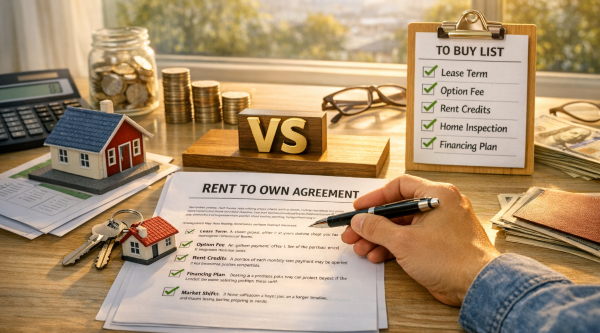
Pros and cons of rent to own homes.
Understand the trade-offs. Protect your interests. Build toward ownership wisely.
Home > Real Estate Aricles >> Real Estate Articles for Buyers and Sellers >> Rent to Own or Lease Purchase Real Estate Articles
🔥Top Pages in August 2026

💌 Expired Listing Letters →
Send the message that gets sellers calling you back
📝 Email Marketing for Real Estate Agents →
Send emails that spark replies and start real conversations
🏷️ Real Estate Agent Directory →
Get discovered by buyers, sellers, and referral partners searching for agents
🏷️Real Estate Marketing Talk Blog →
Get fresh ideas that help agents grow, connect, and win more business
📬Real Estate Website Content →
Simple System. Uncommon Results.
🚪 Your Gateway to Targeted Insights

👔 For Agents →
Branding tips, lead gen strategies & marketing tools to grow your business
🏡 For Buyers → Smart buying guides, market insights & negotiation tips for your next move
📦 For Sellers → Listing prep, pricing strategies & proven tactics to sell fast and profitably
💰 For Investors → ROI-focused content, property analysis tools & market trend breakdowns