Creative Real Estate Business Card Ideas That Make Lasting Impressions
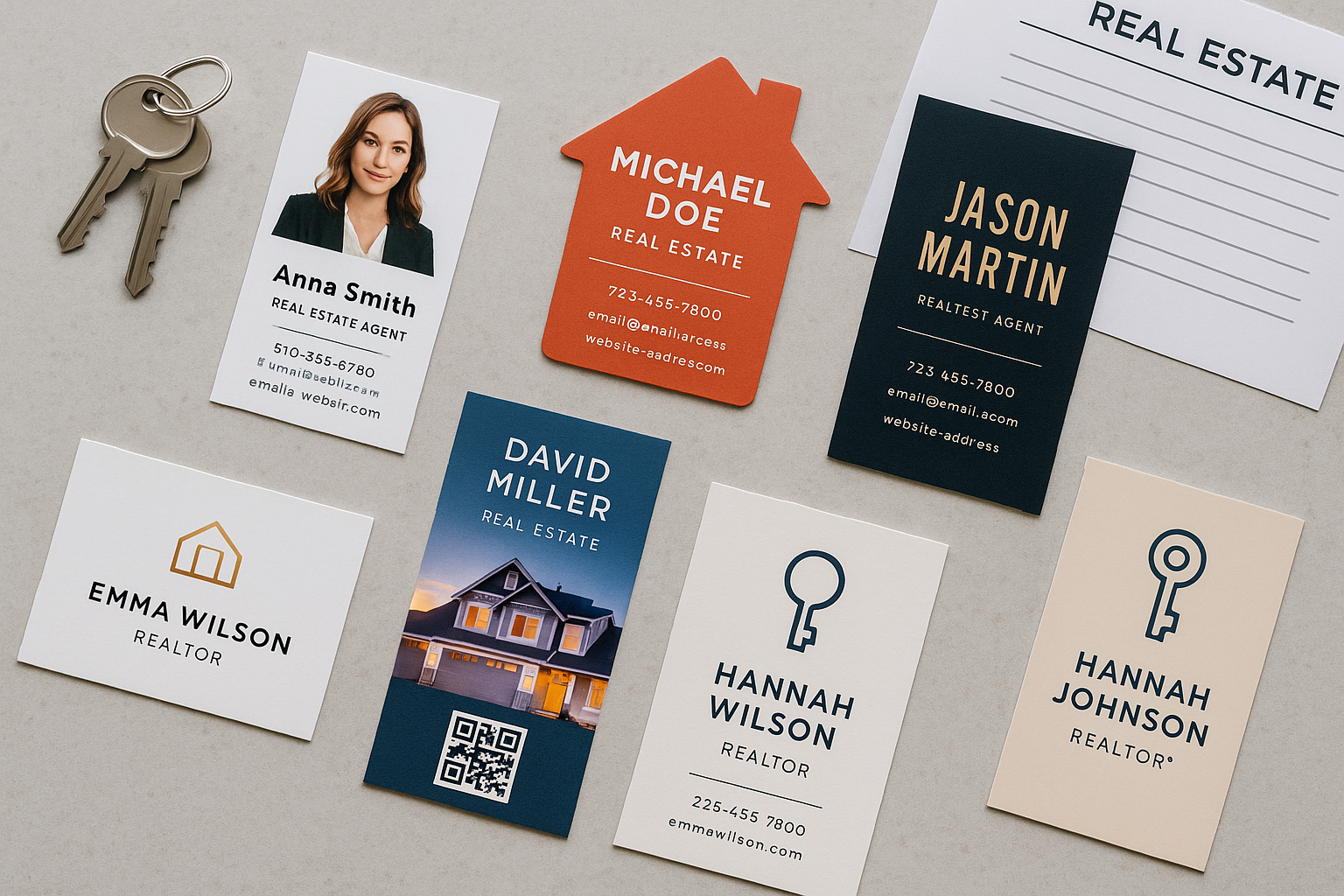
Creative real estate business card ideas are more than design trends—they are positioning tools. In a competitive market, your business card isn’t just contact information. It’s brand reinforcement. It’s authority. It’s memorability. And when structured strategically, it becomes a physical extension of your marketing system.
If you want your card to align with your long-term positioning strategy, make sure your visuals, messaging, and tone reflect your brand foundation. Your card should echo the clarity defined in your Real Estate Branding Blueprint, not contradict it.
Why Real Estate Business Cards Still Matter
Digital tools are powerful—but physical branding still influences perception. A business card creates a tactile impression that email signatures and profile links simply cannot replicate.
At open houses. Networking events. Showings. Coffee shops. Community events. A well-designed card creates a moment of brand reinforcement. And when that design feels intentional, prospects subconsciously associate you with professionalism and preparedness.
Even better, modern cards bridge offline and online marketing. A QR code can drive traffic to listings, lead magnets, or even your digital business card for real estate agents, allowing your printed piece to function as a gateway to your full marketing funnel.
10 Creative Real Estate Business Card Ideas
Here are competitive, conversion-aware ideas that elevate your brand while remaining practical.
1. Photo-Forward Authority Design
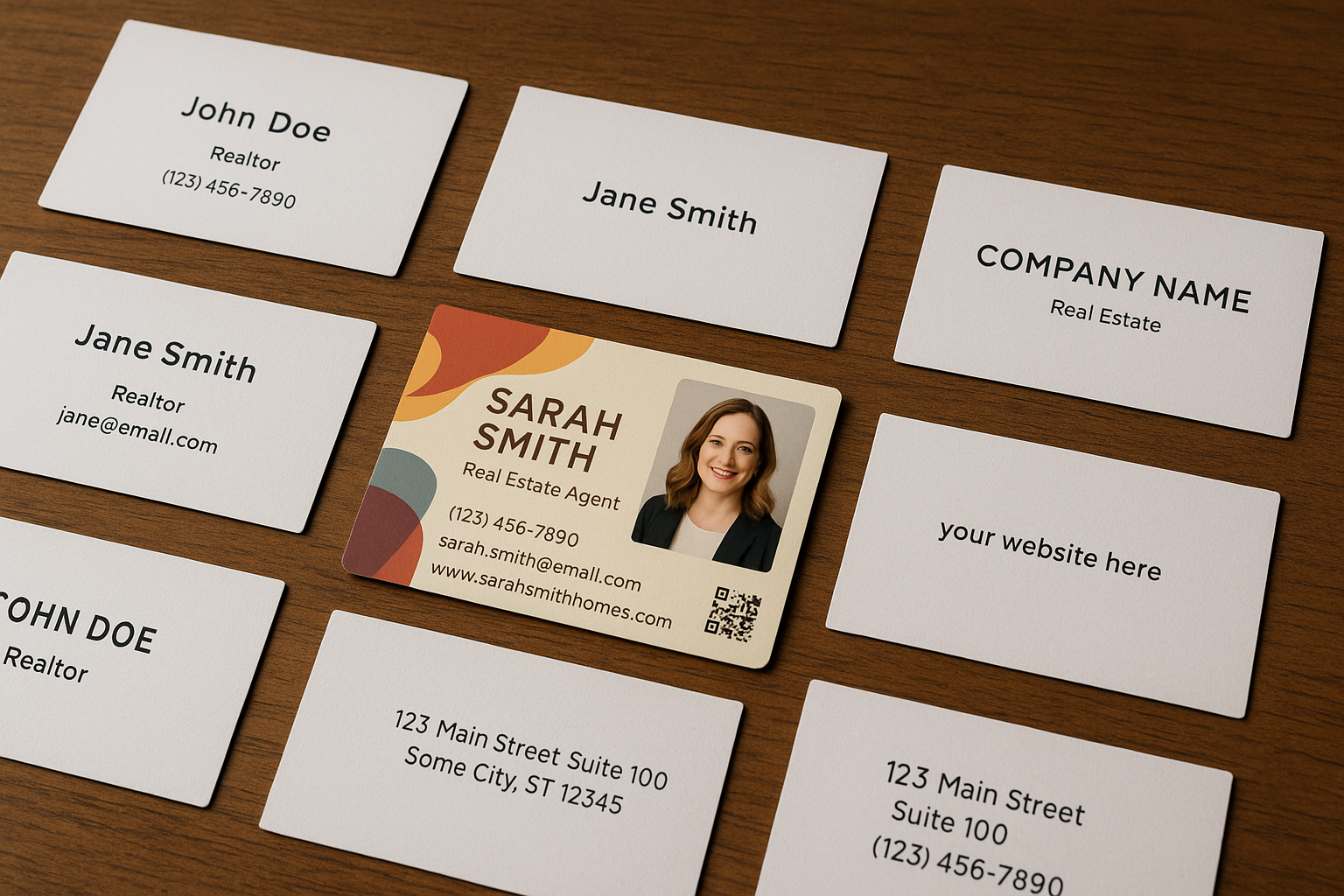
Professional headshots build trust instantly. Pair your image with a confident tagline and clean typography. Avoid clutter. Keep the focus on you and your positioning statement.
2. Vertical Layouts That Break the Pattern
Most agents use horizontal cards. Vertical cards disrupt visual monotony. That subtle difference increases retention and signals confidence.
3. QR Code with Clear CTA
Some agents now incorporate scannable technology directly into their designs. Using QR code business cards allows prospects to scan a card and immediately reach a landing page, property search, or contact form.
Don’t just place a QR code—give it a job. “Scan for today’s listings.” “Scan for free home valuation.” Clear instruction increases usage.
A well-designed card should do more than share your contact details—it should feed into your real estate lead generation system. Whether you’re driving traffic to a home valuation page, a buyer checklist, or a niche landing page, every card should have a measurable next step.
4. Mini Portfolio Back Panel
Use the back to showcase a recent sale, before-and-after flip, or market stat. This transforms your card from contact tool to micro-proof piece.
5. Die-Cut Shapes for Niche Branding
House-shaped or key-shaped cards create novelty. Best used by agents targeting luxury, relocation, or investment niches.
6. Premium Texture and Finishes
Matte suede. Spot gloss. Raised lettering. Foil edges. Texture influences perception. Premium feel = premium positioning.
7. Minimalist Luxury Aesthetic
White space. Neutral tones. Strong contrast. One statement line. Confidence is often communicated through restraint.
8. Signature Quote or Market Insight
A short, bold statement adds personality. Example: “Helping Gainesville homeowners move smarter.” Keep it niche-relevant.
9. Interactive Elements
Folded cards or subtle layered design can create engagement—but keep practicality in mind. Creativity should never sacrifice readability.
10. Specialty Cards for Target Markets
Investor-focused language for flippers. Relocation messaging for military families. Luxury branding for high-end buyers. Tailoring signals expertise.
For broader strategy context and layout variations, explore additional examples on the Real Estate Business Cards hub page.
Design Tips That Convert (Not Just Impress)
- Prioritize readability. If someone squints, you’ve lost momentum.
- Limit color palette. Stay consistent with brand tones.
- Include one clear call to action. Don’t overwhelm.
- Match your website branding. Fonts, colors, messaging.
- Leave intentional white space. Crowded cards feel chaotic.
Your card shouldn’t feel disconnected from your digital presence. The messaging, tone, and visual style should mirror your real estate website content so prospects experience one consistent brand from first impression to final click.
Where to Create and Print Your Card
You don’t need to be a designer to execute professionally.
- Canva – Flexible templates for fast customization.
- Moo – Premium finishes and standout materials.
- Vistaprint – Budget-friendly for volume orders.
- Zazzle – Creative specialty styles.
Whichever provider you choose, always order a small test batch first. Check color accuracy, thickness, and readability before scaling production.
Bonus Strategies to Maximize Impact
- Distribute consistently. Networking only works when repeated.
- Pair with value. Hand your card with a quick market tip.
- Integrate into listing packets. Add two extra cards inside.
- Leave strategically. Local businesses, bulletin boards, community centers.
- Track engagement. Use unique QR destinations for measurable response.
Remember: business cards don’t generate leads alone. They amplify conversations already started. Used consistently, they become silent brand ambassadors working long after the handshake ends.
Want these business card ideas to do more than “look good”? Plug them into your broader Real Estate Marketing Tips playbook—because cards work best when they’re part of a repeatable visibility system, not a one-off print job.
Business Card Strategy Resources

Home > Real Estate Business Cards >> Creative Real Estate Business Card Ideas
🔥Top Pages in July 2026

💌 Real Estate Marketing Talk Home Page→
Timely Strategies and Resources for Agents | Buyers, Sellers and Investors!
📝 Expired Listing Postcards →
Ideas That Flip the Script on Agent Visibility
🏷️How to Get Expired Real Estate Leads Without Cold Calling →
Create a system where expired listing owners call you first
📬Farming Expired Listings →
Simple System. Uncommon Results.
🏷️ Real Estate Agent Directory →
Magnetic Taglines That Pull Clients Toward You Instantly
🚪 Your Gateway to Targeted Insights

👔 For Agents →
Branding tips, lead gen strategies & marketing tools to grow your business
🏡 For Buyers → Smart buying guides, market insights & negotiation tips for your next move
📦 For Sellers → Listing prep, pricing strategies & proven tactics to sell fast and profitably
💰 For Investors → ROI-focused content, property analysis tools & market trend breakdowns