Seasonal Real Estate Marketing Ideas for Agents: Campaigns That Create Momentum All Year

1. Seasonal Visibility Themes
Seasonal marketing works because buyers and sellers don’t make decisions in a vacuum—they respond to timing, emotion, and the subtle cues of the year. Each season carries its own psychology, and when agents align their messaging with those rhythms, visibility becomes momentum.
Spring: The Market Awakening
Spring is when homeowners begin imagining what’s next. A simple neighborhood update or a well‑timed postcard can position you as the agent who understands timing better than anyone. If you’re already using consistent real estate postcard marketing, spring is when those touches start paying off.
Summer: Relocation and Move‑Up Energy
Families move when school is out. Your messaging should shift toward convenience, timing, and “making the move before fall routines return.” Summer campaigns thrive when they highlight ease, flexibility, and opportunity.
Fall: The Last Push Before the Holidays
There’s a natural tension in fall—list now or wait until next year? This is where your expertise becomes leverage. A short market update or seasonal guide can help homeowners make confident decisions.
Winter: Serious Buyers Only
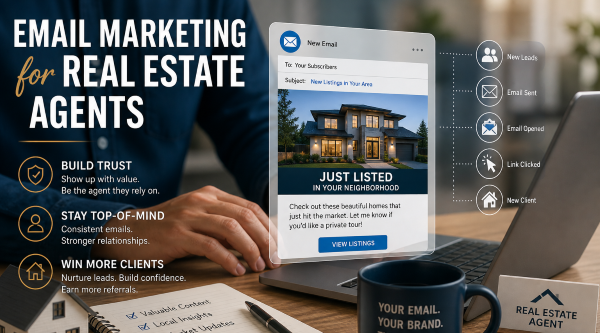
Winter campaigns work because the noise drops. A well‑crafted email series—especially if you’re already using smart real estate email marketing—can reach the motivated buyers who remain active when others pause.
2. Holiday‑Driven Touchpoints
Holidays create natural openings—moments where connection feels personal, not promotional. These touchpoints build trust, reinforce your presence, and keep you top‑of‑mind without pressure.
Thanksgiving Gratitude Mailers
A simple “thank you for being part of this community” message can outperform any market update. It’s emotional, grounded, and memorable.
New Year “Home Goals” Campaigns
New Year messaging pairs beautifully with digital tools, especially when you’re using digital business cards to make follow‑up frictionless. Homeowners are thinking about change—your job is to help them imagine it.
Mother’s Day / Father’s Day Appreciation
These aren’t sales moments—they’re connection moments. A small gesture can build long‑term trust and deepen your presence in the neighborhood.
Back‑to‑School Neighborhood Updates
Parents are thinking about routines, commutes, and school zones—all deeply tied to real estate decisions. A timely update can position you as the agent who understands what matters most.
3. Seasonal Print + Digital Pairings
The strongest seasonal campaigns pair one print touch with one digital touch. It creates a sense of presence without overwhelming people, and it reinforces your message across multiple channels.
Seasonal Postcards + Email Follow‑Ups
A spring postcard about market activity followed by a short email with deeper insights feels natural—not pushy. This pairing works especially well when your email strategy is already dialed in through email marketing best practices.
Seasonal Flyers + Social Templates
A fall “last chance before the holidays” flyer can be mirrored with a matching social post. Consistency builds recognition and strengthens your brand identity.
Seasonal Guides + Lead Magnets
If you’ve created a downloadable resource—even something as simple as a “Seasonal Home Maintenance Checklist”—you can pair it with a print teaser. Long‑form content, like lead‑generating books, can quietly reinforce your authority.
4. Local Event Tie‑Ins
Local events are the heartbeat of seasonal marketing. They give you a reason to show up—and a reason for people to remember you. These moments build familiarity, trust, and community presence.
Farmers Markets
A simple branded card or small giveaway can create dozens of micro‑interactions. This is where strong branding—like your real estate business cards—becomes a quiet asset.
School Events
Back‑to‑school nights, fundraisers, and sports events are natural visibility moments. You’re not selling—you’re supporting.
Community Festivals
Seasonal festivals are perfect for neighborhood‑focused messaging. People are relaxed, open, and receptive.
Neighborhood Yard Sales
These events attract homeowners who are already thinking about “what’s next.” A friendly conversation can turn into a future listing.
5. Built‑In Follow‑Up Systems
Seasonal marketing isn’t just about the first touch—it’s about the second and third. Follow‑up systems turn seasonal touches into long‑term momentum.
Seasonal Check‑Ins
A quick “How’s the home holding up this season?” message feels personal and helpful. It opens doors without pressure.
Market Updates
Seasonal shifts often bring pricing changes. A short update can position you as the agent who understands timing better than anyone.
Home Maintenance Reminders
These are simple, evergreen, and appreciated. They also create natural openings for conversation.
Seasonal Home Value Checks
A well‑timed value check can turn curiosity into a listing conversation. It’s one of the most effective ways to convert seasonal interest into real opportunities.
Final Thoughts
Seasonal marketing works because it aligns with how people actually make decisions—emotionally, seasonally, and in response to the rhythms of their lives. When you combine seasonal visibility, holiday touchpoints, print and digital pairings, local event presence, and thoughtful follow‑up, you create a marketing engine that feels natural, human, and consistently effective.
More Strategies Agents Are Acting On


Home > Real Estate Marketing Ideas >> Seasonal Real Estate Marketing Ideas for Agents
🔥Top Pages in July 2026

💌 Real Estate Marketing Talk Home Page→
Timely Strategies and Resources for Agents | Buyers, Sellers and Investors!
📝 Expired Listing Postcards →
Ideas That Flip the Script on Agent Visibility
🏷️How to Get Expired Real Estate Leads Without Cold Calling →
Create a system where expired listing owners call you first
📬Farming Expired Listings →
Simple System. Uncommon Results.
🏷️ Real Estate Agent Directory →
Magnetic Taglines That Pull Clients Toward You Instantly
🚪 Your Gateway to Targeted Insights

👔 For Agents →
Branding tips, lead gen strategies & marketing tools to grow your business
🏡 For Buyers → Smart buying guides, market insights & negotiation tips for your next move
📦 For Sellers → Listing prep, pricing strategies & proven tactics to sell fast and profitably
💰 For Investors → ROI-focused content, property analysis tools & market trend breakdowns