Lease Option vs Lease Purchase Real Estate Explained
Clearing Up the Confusion
“Lease option” and “lease purchase” are two terms often used interchangeably in real estate, but they are not the same thing. For buyers and sellers alike, understanding the difference can mean choosing between flexibility and commitment—or between opportunity and regret. This guide breaks down how each agreement works, compares their strengths and weaknesses, and helps you decide which structure aligns with your goals.
For broader context on how these agreements fit into the real estate landscape, start with the real estate articles for buyers and sellers page.
What Is a Lease Option?
A flexible path toward ownership
A lease option is a rental agreement that gives the tenant the option—but not the obligation—to purchase the property at the end of the lease term. It’s a “try before you buy” structure that appeals to buyers who need time to prepare financially.
Key features
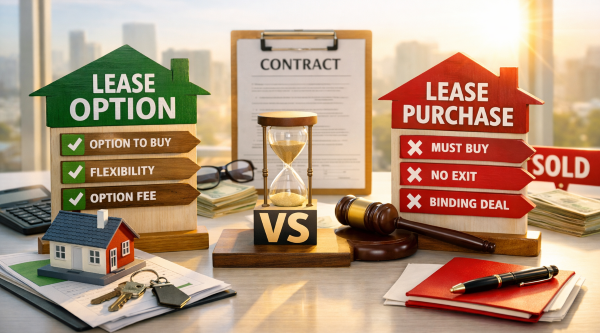
Option fee: Paid upfront to secure the right to buy later.
Flexibility: The tenant can walk away if they choose not to purchase (though the option fee is usually non-refundable).
Common use: Buyers who want to test the home or neighborhood, or who need time to improve credit or savings.
For a deeper dive into how investors use this structure, the Step by Step Guide to Lease Option Real Estate Investing is a helpful companion.
What Is a Lease Purchase?
A more binding commitment
A lease purchase agreement is similar to a lease option, but with one major difference: the tenant is required to buy the home at the end of the lease. This structure offers more certainty for sellers and more obligation for buyers.
Key features
Purchase obligation: The buyer must follow through with the sale when the lease expires.
Contract terms: Purchase price, financing expectations, and timelines are typically spelled out from the start.
Seller advantage: Greater security knowing the tenant is committed to buying.
Key Differences at a Glance
Flexibility vs commitment
Purchase requirement: Optional (lease option) vs mandatory (lease purchase).
Flexibility: High with a lease option; low with a lease purchase.
Buyer risk: Lower with a lease option; higher with a lease purchase due to penalties for non-performance.
Seller certainty: Lower with a lease option; higher with a lease purchase.
For a broader look at the trade-offs, the Pros and Cons of Rent to Own Homes for Buyers and Sellers Guide provides additional insight.
Pros and Cons of a Lease Option
Pros for buyers
• Flexibility to walk away if circumstances change.
• Time to save money and build credit.
• Ability to lock in a purchase price without full commitment.
Cons for buyers
• Option fee is lost if the purchase doesn’t happen.
• Monthly rent may be higher due to credits.
Pros for sellers
• Collect upfront option fee and steady rent.
• Attract buyers who may not qualify today.
Cons for sellers
• No guarantee the tenant will buy.
• May need to re-market the property if the deal falls through.
Pros and Cons of a Lease Purchase
Pros for buyers
• Certainty of securing the home.
• Rent credits may help build toward the purchase.
• Ability to lock in a price before market shifts.
Cons for buyers
• Locked into buying even if circumstances change.
• Risk of penalties if financing falls through.
Pros for sellers
• More security knowing the home will sell.
• Reduced risk of the tenant walking away.
Cons for sellers
• If the buyer can’t secure financing, disputes may follow.
• Property is tied up until the lease ends.
Which Agreement Works Best?
Lease option fits
Buyers who are unsure about financing or long-term commitment; sellers who are open to waiting but want upfront compensation.
Lease purchase fits
Buyers confident they can qualify for a loan later; sellers who want assurance of a future sale.
The decision often comes down to balancing flexibility versus certainty.
Tips for Buyers and Sellers
Get everything in writing
Clear, detailed contracts prevent misunderstandings and protect both parties.
Seek legal review
A real estate attorney can ensure the agreement is fair, enforceable, and compliant with state laws.
Think ahead
Buyers should prepare early for financing; sellers should plan for possible delays.
Stay realistic
Don’t assume markets or credit scores will improve automatically—plan based on current realities.
For additional protection strategies, the How to Avoid Scams in Rent to Own Agreements Guide is a must-read.
Conclusion: Know the Difference Before You Sign
Lease option and lease purchase agreements may sound similar, but their impact on your finances, obligations, and peace of mind is very different. Buyers gain flexibility with lease options, while sellers gain certainty with lease purchases. The key is choosing the structure that aligns with your goals—and never signing without understanding what you’re agreeing to.
Next Guides to Explore



Lease option vs lease purchase.
Know the terms. Compare the risks. Choose with confidence.
Home > Real Estate Articles >> Real Estate Articles for Buyers and Sellers >> Lease Option vs Lease Purchase Real Estate Explained
🔥Top Pages in August 2026

💌 Expired Listing Letters →
Send the message that gets sellers calling you back
📝 Email Marketing for Real Estate Agents →
Send emails that spark replies and start real conversations
🏷️ Real Estate Agent Directory →
Get discovered by buyers, sellers, and referral partners searching for agents
🏷️Real Estate Marketing Talk Blog →
Get fresh ideas that help agents grow, connect, and win more business
📬Real Estate Website Content →
Simple System. Uncommon Results.
🚪 Your Gateway to Targeted Insights

👔 For Agents →
Branding tips, lead gen strategies & marketing tools to grow your business
🏡 For Buyers → Smart buying guides, market insights & negotiation tips for your next move
📦 For Sellers → Listing prep, pricing strategies & proven tactics to sell fast and profitably
💰 For Investors → ROI-focused content, property analysis tools & market trend breakdowns