21 Real Estate Email Marketing Ideas To Power Your Success

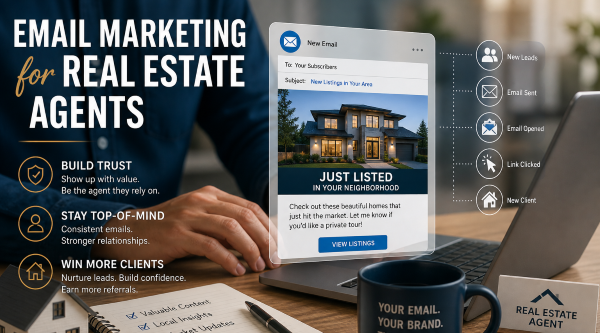
Email remains one of the simplest, most reliable ways to stay in front of buyers and sellers—and to guide people calmly from “just looking” to “ready to move.” If you want a clear foundation for doing it well, start with this overview on Email Marketing for Real Estate Agents. From there, the 21 ideas on this page give you practical, ready-to-use ways to strengthen your messaging, build trust, and stay top‑of‑mind in your market.
You don’t need to use all 21 ideas at once. Treat them like a menu. Start with a few that fit your market and personality, test them, and layer in more as your confidence and list grow.
Why email still matters in real estate
1. Treat every email like a one-to-one conversation
Instead of “blasting your list,” write as if you’re talking to one person who’s a little unsure and needs a calm, confident guide. Use their first name, reference their situation when you can, and keep the tone conversational. The more your emails feel like a real conversation, the more replies—and appointments—you’ll earn.
2. Give every email one clear next step
Each message should have a single, simple call to action: reply with a question, click to see a listing, or book a quick pricing consult. When you include a link, send people to helpful, consumer‑friendly resources—something that answers a question they’re already thinking about. For example, you might point buyers and sellers to a clear explainer like this guide to title insurance so they always land somewhere that builds confidence and keeps the conversation moving forward.
3. Turn your best content into “mini lessons”
You don’t have to reinvent the wheel. Take a strong article or guide and break it into three or four short “mini lessons” you send over a week or two. Each email highlights one key idea, then links back to the full piece for readers who want to go deeper.
Build a strong list that actually wants to hear from you
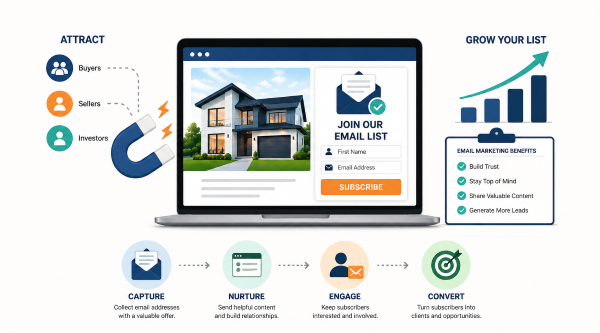
4. Create a specific, problem-solving lead magnet
Offer something that solves a real, felt problem: “7 Pricing Mistakes Gainesville Sellers Make” or “First-Time Buyer Checklist for 2026.” Keep it short, practical, and easy to consume. The clearer the promise, the more likely people are to join your list.
5. Use opt-in forms that match the message
Place opt‑in forms where they naturally support your lead‑generation goals—at the end of helpful articles, on your contact page, and on key resource pages that buyers and sellers already visit. The goal is simple: make it easy for people to raise their hand. As an agent, the benefit is twofold: you grow a permission‑based list, and every new subscriber enters your world already expecting value from you. When you want to refine your approach, you can study resources like this Opt‑in Email Marketing guide to strengthen how you attract, tag, and nurture new leads.
6. Segment by stage: curious, planning, ready
Tag subscribers based on what they download or which links they click. Someone reading “Should I Sell Now or Wait?” is in a different place than someone requesting a relocation guide. Simple segments let you send more relevant messages without overcomplicating your system.
7. Invite your offline world onto your list
Every open house, community event, and casual conversation is a chance to say, “I send a short market email once or twice a month—want me to add you?” When you follow up, reference where you met so the connection feels natural and respectful.
Nurture sequences that convert quietly over time
8. Build a simple 5-email welcome sequence
When someone joins your list, don’t leave them hanging. Map out five short emails: your story, how you work, what to expect from your emails, a quick win (like a checklist), and a soft invitation to talk. This sequence does the heavy lifting of trust-building while you’re out showing homes.
9. Use autoresponders to stay consistent
If consistency has been your struggle, lean on automation. A well-planned autoresponder series can deliver helpful content, stories, and offers on autopilot. Even a simple “drip” that introduces your services, shares a few case studies, and answers common questions can keep you top of mind without daily effort.
10. Share real client journeys (with permission)
Turn past transactions into short, anonymized stories: where the client started, what they were worried about, and how you helped them get to the finish line. Stories are easier to remember than stats—and they quietly demonstrate your value without you having to “sell.”
11. Follow up after every key milestone
Create simple follow-up emails for moments like: after a showing, after a listing appointment, after a closing, and six months after move-in. These don’t need to be long. A quick check-in, a resource link, and an open invitation to ask questions are enough to keep the relationship warm.
Market updates and education that people actually read
12. Use a simple three-block market update format
Keep your market emails skimmable: 1) inventory and months of supply, 2) price movement and days on market, 3) what it means for buyers and sellers right now. Add a short “What this means for you” paragraph so readers can quickly see how the numbers affect their decisions.
13. Turn how‑to guides into short email series
If you’ve created step‑by‑step guides for buyers, sellers, or investors, you can easily repurpose them into short email sequences that nurture leads over time. A buyer‑focused piece from your Buyer How‑To Library, a seller prep guide from your Seller How‑To Resources, or an investment explainer from your Investor How‑To Guides can each become a simple three‑part series that walks subscribers through mindset, mechanics, and next steps. Keep each email focused on one takeaway and end with a small action that helps people feel more informed and more confident moving forward with you.
14. Demystify financing in plain language
Create a recurring “Money Monday” or “Financing Friday” email where you explain one concept at a time: pre-approval, rate buydowns, closing costs, or appraisal gaps. Keep the tone calm and non-technical. Your goal is to make readers feel more confident, not overwhelmed.
15. Offer seasonal home care and value tips
Send short seasonal checklists: what to do before summer storms, how to prep for winter, or simple upgrades that boost perceived value. These emails keep you top of mind even when someone isn’t actively buying or selling.
Community, story, and relationship-building emails
16. Highlight local events and small businesses
Once a month, send a “What’s Happening Around Town” email featuring local events, new restaurants, or small businesses you like. It shows you’re plugged into the community and gives people a reason to open your emails even when they’re not in the market.
17. Celebrate client milestones and home anniversaries
A simple “Happy Home Anniversary” email with a short note, a quick market snapshot, and an invitation to ask about current value can spark conversations and referrals. You can also share how you organize these touchpoints, drawing on ideas like those in this Email Marketing Lists resource.
18. Share behind-the-scenes “day in the life” stories
Occasionally pull back the curtain: a tricky negotiation you navigated, a creative solution to a problem, or a moment where you went the extra mile. Keep it short, honest, and focused on what the reader can learn or feel reassured about.
19. Ask for feedback with three simple questions
Send a short survey after closings or major interactions. Ask what almost stopped them from moving forward, what helped most, and what you could improve. This not only improves your service but also gives you language you can reuse in future emails and marketing.
Automation and systems that keep you consistent
20. Build a simple monthly email rhythm
Decide on a cadence you can keep: for example, one market update, one educational email, and one story or community email each month. Put it on your calendar and batch-write when you can. Consistency beats perfection every time.
21. Connect email to your bigger marketing system
Email works best when it’s part of a larger system—your website, your letters, your social presence, and your offline conversations. When your emails point back to cornerstone resources and your site invites people onto your list, everything you create starts working together to build trust and steady lead flow.
Real Estate Email Marketing Ideas — FAQ
How often should I email my real estate list?
Aim for consistency over volume. For most agents, one to three emails per month works well: a market update, a helpful how‑to, and an occasional story or community‑focused email. If you’re running a short welcome or nurture sequence, you can send a bit more frequently at the beginning, then settle into a steady rhythm that feels sustainable.
What should I send new subscribers first?
Start with a short welcome sequence that introduces who you are, how you work, and what subscribers can expect from your emails. Include at least one practical resource—such as a buyer, seller, or investor guide—to give them an immediate win. If you want to strengthen the content you offer in those early touches, you can pull ideas from your Real Estate Website Content library to ensure your welcome emails feel helpful, relevant, and aligned with what people are already searching for.
Do I need a big list for email marketing to work?
No. A small, engaged list will outperform a large, cold one every time. Focus on attracting the right people with clear opt‑ins, then serve them consistently with helpful, easy‑to‑read messages. Over time, your list will grow naturally as you keep delivering value.
What if I’m not a “natural writer”?
You don’t have to be. Think of each email as a short conversation: one idea, one story, one next step. You can also repurpose content from your blog, letters, or other marketing pieces and simply adapt the tone so it sounds like you. The more you write, the more natural it will feel.
More Email Marketing Resources

Home > Email Marketing For Real Estate Agents >> Real Estate Email Marketing Ideas
🔥Top Pages in July 2026

💌 Real Estate Marketing Talk Home Page→
Timely Strategies and Resources for Agents | Buyers, Sellers and Investors!
📝 Expired Listing Postcards →
Ideas That Flip the Script on Agent Visibility
🏷️How to Get Expired Real Estate Leads Without Cold Calling →
Create a system where expired listing owners call you first
📬Farming Expired Listings →
Simple System. Uncommon Results.
🏷️ Real Estate Agent Directory →
Magnetic Taglines That Pull Clients Toward You Instantly
🚪 Your Gateway to Targeted Insights

👔 For Agents →
Branding tips, lead gen strategies & marketing tools to grow your business
🏡 For Buyers → Smart buying guides, market insights & negotiation tips for your next move
📦 For Sellers → Listing prep, pricing strategies & proven tactics to sell fast and profitably
💰 For Investors → ROI-focused content, property analysis tools & market trend breakdowns