How to Build an Email List: The Cornerstone of Modern Real Estate Marketing
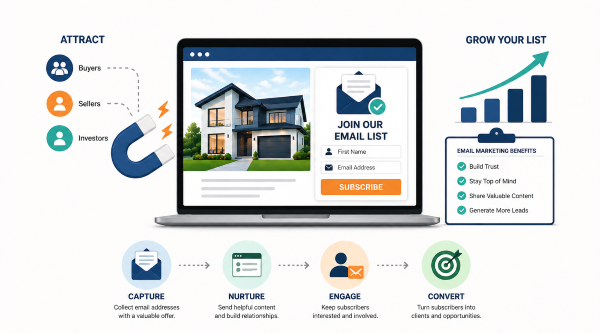
Learning how to build an email list isn’t just about staying connected with people who visit your website. It’s about creating simple, natural touchpoints everywhere your business shows up — in person, on social media, at open houses, through community events, and yes, online too. That broader approach is exactly why email marketing for real estate agents matters: it helps you follow up, build familiarity, and turn quiet interest from any channel into future conversations.
Why Email List Building Still Matters
A good list is not just a collection of names. It is a permission-based audience of buyers, sellers, investors, agents, or local prospects who want useful information from you.
Think Relationship First
When your emails are helpful, consistent, and easy to read, subscribers begin to trust your voice before they need your service.
Start With the Right Audience
Before creating forms, pages, or campaigns, decide who the list is for. A buyer list needs different content than a seller list. An investor list needs different language than a homeowner list. Real estate agents may want templates, scripts, flyers, or lead generation ideas.
This is where segmentation comes in. Not every subscriber wants the same thing. Buyers, sellers, investors, and agents all respond to different types of information.
Instead of sending the same email to everyone, group your list by interest and send content that fits. If you want a simple way to structure this, see email marketing lists for examples of how to organize and follow up with each audience.
Keep the Signup Question Simple
You do not need to ask for everything upfront. Name, email address, and one simple category choice may be enough: buyer, seller, investor, agent, or content marketer. The easier the form feels, the more likely people are to complete it.
Create a Strong Opt-In Offer
People rarely subscribe just because a website says “join my newsletter.” They subscribe when the offer feels specific, useful, and immediately relevant. That could be a checklist, short guide, local market update, email course, template pack, or buyer/seller worksheet.
For real estate, strong opt-in ideas include a first-time buyer checklist, home seller prep guide, expired listing farming system, open house follow-up kit, or neighborhood pricing update. The key is to match the offer to the visitor’s intent.
Make the Value Obvious
Your opt-in copy should answer one quiet question: “Why should I give you my email address?” Be clear. Tell them what they get, who it is for, and how it helps. If you need a deeper strategy, your page on opt-in email marketing can support this section naturally.
Place Signup Opportunities Where Interest Is Highest
Your website should not hide your signup form. Place it where people are already engaged: near article openings, after helpful sections, inside sidebar areas, on hub pages, and at the end of related content.
A dedicated contact collection page can work especially well because it gives every audience one clear place to subscribe. Instead of scattering unrelated forms across the site, you can guide visitors to one well-structured page that lets them choose the information they want.
Use Context, Not Clutter
A signup box should feel like a helpful next step, not a disruption. If someone is reading about seller marketing, offer seller tips. If they are reading about buyer education, offer buyer tools. Context increases trust.
Use Content to Grow Your List
Your articles, blog posts, and resource pages can quietly feed your list every day. Each page should have a logical next step that invites the visitor to go deeper.
For example, an article on real estate email marketing ideas can lead naturally into a signup form offering swipe files, follow-up prompts, or campaign examples. A page about website traffic can invite people into a lead-building checklist.
Build Around Problems People Already Have
The strongest content solves real problems: getting more leads, staying visible, following up better, attracting buyers, converting sellers, or building trust faster. When the article is useful, the opt-in feels like a continuation instead of a pitch.
Follow Up With Purpose
Getting the subscriber is only the beginning. The real value comes from what happens next. Your first few emails should welcome the reader, deliver the promised resource, and set expectations for future messages.
Then continue with useful, steady communication. Share tips, examples, short stories, checklists, links to helpful pages, and occasional offers. If your goal is to generate more real estate email leads, your follow-up should make it easy for people to reply, click, request help, or take the next step.
Do Not Overcomplicate the Sequence
A simple welcome email, three to five value emails, and a clear invitation can outperform a complicated campaign that never gets finished. Start clean. Improve as you learn what subscribers open, click, and respond to.
Final Thoughts on How to Build an Email List
Building an email list is not about chasing strangers. It is about creating a reliable path for interested people to hear from you again. When your website, content, opt-in offer, and follow-up work together, your list becomes more than a database. It becomes a business-building system.
Start with one audience. Create one strong offer. Place it on the pages where interest is already happening. Then follow up with calm, useful, consistent communication. That is how email list building becomes a modern real estate marketing advantage.
Email List Building — FAQ
What is the best way to build a real estate email list?
Start with a helpful opt-in offer, place it on relevant website pages, and follow up consistently. A good list-building system connects your content, signup forms, and email sequence so subscribers know exactly why they joined.
Should I have one list or several lists?
It is usually better to segment your list by audience. Buyers, sellers, investors, and agents often need different messages. Your email marketing lists strategy should reflect those differences.
What should I offer people to get them to subscribe?
Offer something specific and useful, such as a checklist, guide, market update, swipe file, or planning worksheet. The best offer matches the page they are reading and solves a problem they already care about.
How often should I email my list?
Consistency matters more than frequency. Weekly, biweekly, or monthly can all work if the content is useful. For more topic ideas, review your real estate email marketing ideas and build from there.
Can my website help me grow my list?
Yes. Strong articles, lead magnets, sidebar forms, and dedicated opt-in pages can turn passive visitors into subscribers. Your real estate website leads strategy should include email capture as a core goal.
Keep Growing Your Email Strategy



So, here’s the recap on how to build an email list:
Start small. Stay steady. Keep showing up.
That’s the difference.
Home > Email Marketing For Real Estate Agents >> How to Build an Email List
🔥Top Pages in August 2026

💌 Expired Listing Letters →
Send the message that gets sellers calling you back
📝 Email Marketing for Real Estate Agents →
Send emails that spark replies and start real conversations
🏷️ Real Estate Agent Directory →
Get discovered by buyers, sellers, and referral partners searching for agents
🏷️Real Estate Marketing Talk Blog →
Get fresh ideas that help agents grow, connect, and win more business
📬Real Estate Website Content →
Simple System. Uncommon Results.
🚪 Your Gateway to Targeted Insights

👔 For Agents →
Branding tips, lead gen strategies & marketing tools to grow your business
🏡 For Buyers → Smart buying guides, market insights & negotiation tips for your next move
📦 For Sellers → Listing prep, pricing strategies & proven tactics to sell fast and profitably
💰 For Investors → ROI-focused content, property analysis tools & market trend breakdowns