Who Pays What at a Real Estate Closing? A Clear Breakdown for Buyers and Sellers
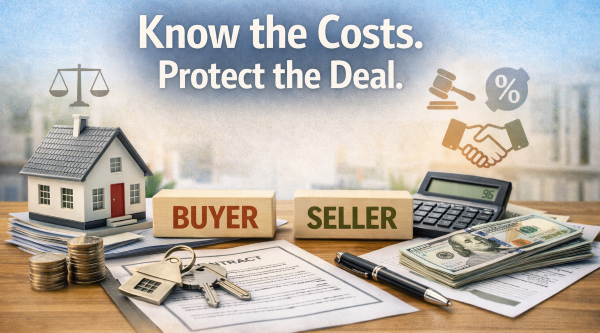
Who pays what at a real estate closing is one of the most common—and misunderstood—questions buyers and sellers ask. The short answer? Both parties pay. The better answer? It depends on the deal, the market, and what’s negotiated.
By the time you reach the closing table, most of the financial terms are already decided. But understanding who typically pays for what gives you leverage earlier—when it matters most—especially when you’re reviewing real estate articles for buyers and sellers that break down how deals are structured.
If you're still getting familiar with the overall process, this step-by-step guide to what happens at a real estate closing will give you the full picture of how everything comes together.
Who Pays Closing Costs: Buyer or Seller?
The reality is simple: both buyers and sellers have closing costs. But they don’t pay the same things.
Buyers typically pay costs tied to financing and securing the property. Sellers usually cover costs associated with transferring ownership and paying off existing obligations.
That said, there’s flexibility. In some markets, sellers may agree to cover part of the buyer’s costs to help close the deal. In others, buyers absorb more of the expenses in competitive situations.
Understanding timing also matters. Market conditions can shift expectations quickly—something worth considering if you’re evaluating whether now is the right time to buy or sell.
Buyer Closing Costs vs Seller Closing Costs
Think of closing costs as two separate columns: one for the buyer, one for the seller.
Buyers are paying to secure financing and legally take ownership.
Sellers are paying to transfer ownership and finalize the transaction.
While exact numbers vary, buyers often pay around 2%–5% of the purchase price, while sellers may pay 6%–10% when agent commissions are included.
These numbers aren’t fixed—they shift based on negotiations, lender requirements, and local practices.
What Closing Costs Do Sellers Pay?
Sellers typically cover the costs tied to exiting the property and completing the transfer. These often include:
- Real estate agent commissions (often the largest expense)
- Title insurance (owner’s policy) in many markets
- Transfer taxes and recording fees
- Escrow and closing service fees
- Outstanding property taxes or liens
In some cases, sellers may also agree to cover a portion of the buyer’s closing costs as a concession to keep the deal moving forward.
Before even reaching this stage, many sellers focus on preparation—pricing, positioning, and condition—all of which influence negotiation power. These home selling strategies and tips can help strengthen that position before offers ever come in.
What Closing Costs Do Buyers Pay?
Buyers usually pay costs associated with financing, due diligence, and securing the property. These commonly include:
- Loan origination and lender fees
- Appraisal and inspection costs
- Title insurance (lender’s policy)
- Escrow deposits and prepaid costs
- Homeowners insurance and property tax reserves
These expenses can add up quickly, which is why many buyers benefit from understanding the full financial picture early. A detailed look at how much closing costs are when buying a house can help set realistic expectations.
And beyond costs, preparation matters. Buyers who understand the process, paperwork, and timelines are better positioned to negotiate effectively and avoid surprises.
If you're still in the early stages, these home buying tips and resources can help you move forward with clarity.
Are Closing Costs Negotiable?
Yes—and this is where strategy comes into play.
Many closing costs are negotiable, either directly or indirectly through the purchase agreement. Common negotiation points include:
- Seller concessions toward buyer closing costs
- Repair credits instead of price reductions
- Shared escrow or title fees
- Timing-related adjustments (taxes, utilities, HOA dues)
In slower markets, buyers often have more leverage to ask for concessions. In competitive markets, sellers may receive offers with fewer requests and cleaner terms.
Investors, in particular, pay close attention to these details. Even small adjustments can impact overall profitability—something seasoned professionals factor into their real estate investment and flipping strategies.
Who Pays What at a Real Estate Closing in Different Situations
While there are general patterns, who pays what at a real estate closing can shift depending on the situation. The structure of the deal often matters just as much as the price itself.
In a Buyer’s Market
When inventory is high and demand is lower, buyers typically have more leverage. Sellers may agree to cover a portion of the buyer’s closing costs to make the deal more attractive. This can include lender fees, prepaid expenses, or even repair-related credits.
In a Seller’s Market
When demand is high and inventory is limited, sellers often receive multiple offers. In these situations, buyers may cover more of their own costs—and sometimes even waive requests for concessions to stay competitive.
In New Construction Deals
Builders frequently offer incentives, including paying part or all of the buyer’s closing costs. However, these incentives are often built into the purchase price, so it’s important to evaluate the overall deal.
In Investment or Fix-and-Flip Deals
Investors pay close attention to closing costs because they directly impact margins. In many cases, experienced buyers negotiate aggressively or structure deals to minimize upfront expenses and maximize return.
The key takeaway? There’s no universal rule. Who pays what at a real estate closing is shaped by negotiation, timing, and market conditions—not just tradition.
Final ThoughtAt closing, the numbers are finalized—but the strategy happens long before you get there.
Understanding who pays what at a real estate closing gives you an edge. It helps you ask better questions, structure stronger offers, and avoid last-minute surprises.
Because in real estate, it’s not just about getting to the closing table—it’s about getting there on your terms.
Go Deeper: Smart Moves Before and After Closing


Home > Real Estate Articles for Buyers and Sellers >> Who Pays What at a Real Estate Closing?
🔥Top Pages in July 2026

💌 Real Estate Marketing Talk Home Page→
Timely Strategies and Resources for Agents | Buyers, Sellers and Investors!
📝 Expired Listing Postcards →
Ideas That Flip the Script on Agent Visibility
🏷️How to Get Expired Real Estate Leads Without Cold Calling →
Create a system where expired listing owners call you first
📬Farming Expired Listings →
Simple System. Uncommon Results.
🏷️ Real Estate Agent Directory →
Magnetic Taglines That Pull Clients Toward You Instantly
🚪 Your Gateway to Targeted Insights

👔 For Agents →
Branding tips, lead gen strategies & marketing tools to grow your business
🏡 For Buyers → Smart buying guides, market insights & negotiation tips for your next move
📦 For Sellers → Listing prep, pricing strategies & proven tactics to sell fast and profitably
💰 For Investors → ROI-focused content, property analysis tools & market trend breakdowns