Open House Real Estate Flyer: How to Design, Print, and Promote One That Gets Results
Turn a Simple Open House into a Marketing Machine
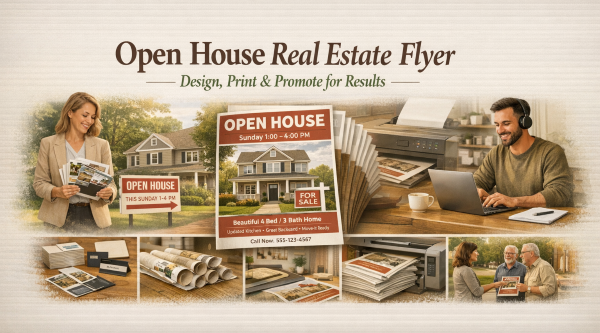
An open house doesn’t fail because of the property—it fails because not enough of the right people show up. That’s where a well-designed open house real estate flyer earns its keep. Done right, it becomes a traffic driver, a brand builder, and a follow-up asset that works before, during, and after the event.
This guide shows you how to create an open house flyer that actually gets noticed—what to include, how to design it quickly, where to distribute it, and how to fold it into a simple, repeatable marketing system. When your flyer strategy supports your broader brand, you gain more visibility with less effort.
What Makes an Open House Real Estate Flyer Effective
An effective open house flyer gives the right person a clear reason to show up. It’s not about flashy design or clever wording—it’s about clarity, relevance, and visibility.
The most effective open house flyers share a few core traits:
- Instant clarity: At a glance, the reader should know it’s an open house, where it is, and when it’s happening.
- Strong visual focus: One compelling property image beats multiple small photos every time.
- Minimal but useful details: Enough information to spark interest without overwhelming the reader.
- Consistent branding: Colors, fonts, and layout that match your professional identity.
- A clear next step: Directions, contact info, or a simple call-to-action that removes friction.
When these elements work together, your flyer stops feeling like “just another piece of paper” and becomes a directional sign, a reminder, and a credibility booster—all at once.
What to Include on an Open House Flyer
An open house flyer doesn’t need to say everything—it needs to say the right things. The goal is to spark interest and make showing up feel easy.
At a minimum, every effective open house real estate flyer should include:
- Clear headline: Make it obvious this is an open house—not a generic listing or promotion.
- Date and time: Use large, readable text so it can’t be missed at a glance.
- Property address: Include the full address and neighborhood if it adds recognition.
- Primary property photo: One strong image works better than several small ones.
- Agent contact information: Name, phone number, and email—easy to find, easy to read.
- Brokerage branding: Consistent colors, logo, and fonts to reinforce credibility.
- Simple call-to-action: Directions, “Join Us,” or “Tour This Home” removes hesitation.
Optional enhancements—such as a QR code, short property highlights, or parking notes—can help, but only if they don’t clutter the design or distract from the main message.
Digital vs. Printed Open House Flyers
Agents often wonder whether open house flyers should be printed, shared digitally, or both. Each format plays a different role, and the strongest results usually come from using them together.
Here’s how the two approaches compare:
- Printed flyers: Ideal for neighborhood exposure, signage tables, coffee shops, and handouts. They create physical reminders and work especially well close to the property.
- Digital flyers: Easy to share via social media, text messages, and online groups. They extend your reach beyond foot traffic and reinforce awareness.
- Printed flyers build presence: People driving or walking nearby are more likely to attend when they’ve seen the event multiple times.
- Digital flyers build repetition: Seeing the same open house online and offline increases recognition and follow-through.
- Email distribution: Share the flyer with your mailing list as a visual reminder of the event.
Rather than choosing one over the other, think in terms of coverage. Printed flyers attract local interest, while digital versions amplify the message and keep your open house top of mind.
How to Design an Open House Flyer Fast
Designing an open house flyer doesn’t have to be time-consuming or expensive. With today’s online design tools and templates, you can create a clean, professional flyer in minutes.
To speed up the process without sacrificing quality, follow these guidelines:
- Start with a proven template: Choose a layout designed for real estate so the structure already works.
- Replace images first: Swap in your property photo before adjusting colors or text.
- Limit font choices: One headline font and one body font keep the flyer clean and readable.
- Stick to brand colors: Consistent colors build recognition across listings and marketing.
- Design once, reuse often: Save your layout and update details for future open houses.
The goal isn’t perfection—it’s consistency. A repeatable flyer system saves time, reinforces your brand, and makes promoting open houses feel routine instead of rushed.
How to Distribute Open House Flyers
A great open house flyer only works if people actually see it. Distribution is where many agents fall short, but small, consistent actions can create noticeable results.
Focus your efforts on places where attention already exists:
- Neighborhood drop: Place flyers on doors, in mailboxes where permitted, or at nearby community boards within a short radius of the property.
- Local businesses: Coffee shops, gyms, salons, and convenience stores often allow flyers on bulletin boards or counters.
- On-site signage: Keep printed flyers at the open house entrance and on sign-in tables.
- Email distribution: Share the flyer with your mailing list as a visual reminder of the event.
- Social sharing: Post the digital version in local groups, stories, and neighborhood feeds.
The goal is simple repetition. When someone sees your open house flyer more than once—online, on a bulletin board, or while driving by—they’re far more likely to attend.
Real-World Example: An Open House Flyer That Worked
To see how these principles come together, consider how one agent used a simple open house flyer to increase attendance and generate serious buyer interest.
Sarah was hosting an open house and wanted more than casual foot traffic—she wanted qualified buyers. Instead of relying on a single channel, she created one clean flyer design and used it everywhere.
- The flyer clearly highlighted the open house date, time, and location.
- A strong property photo made the home recognizable when people drove by.
- Consistent branding tied the flyer to her other marketing materials.
- The same flyer was printed, emailed, and shared digitally for repeated exposure.
On the day of the open house, visitors mentioned seeing the flyer more than once—on a bulletin board, online, or in their inbox. That repetition created familiarity, and familiarity increased turnout.
The result was a steady flow of visitors, meaningful conversations, and multiple offers.
Common Open House Flyer Mistakes to Avoid
Even well-intentioned open house flyers can miss the mark. Most problems aren’t about effort—they’re about small decisions that reduce clarity or visibility.
- Too much information: Overloading the flyer with text makes it harder to scan quickly.
- Weak or cluttered visuals: Multiple small photos compete for attention instead of guiding it.
- Unclear timing: If the date or time isn’t immediately obvious, people move on.
- Inconsistent branding: Changing fonts, colors, or layout from flyer to flyer weakens recognition.
- No clear next step: Without a simple call-to-action, interest fades quickly.
Avoiding these mistakes doesn’t require better design skills—just tighter focus. When your flyer is easy to understand and easy to remember, it’s far more likely to do its job.
Open House Flyer FAQs
Do open house flyers still work for generating traffic?
Yes. When paired with consistent promotion, open house flyers remain one of the most reliable ways to build local awareness and increase turnout. They work even better when your branding is consistent across your flyers, website, and social posts. If you’re refining your look, these real estate branding tips can help.
Is it better to print open house flyers or share them digitally?
Both formats serve different purposes. Printed flyers capture nearby foot traffic, while digital flyers reinforce the event through email, social media, and local groups. Using both creates repetition, which is what actually drives attendance.
How many open house flyers should an agent print?
Most agents start with 25–100 copies depending on neighborhood density, expected foot traffic, and how heavily they plan to promote the event. Higher‑visibility listings or competitive markets may require more.
When is the best time to distribute open house flyers?
Begin promoting several days before the event, with the heaviest distribution happening 24–48 hours beforehand. This timing keeps the event fresh in people’s minds while still giving them time to plan.
Can I promote an open house for a listing that isn’t mine?
In many offices, yes—especially when you’re hosting an open house for another agent. Always confirm office policies, branding requirements, and MLS rules before promoting someone else’s listing.
What flyer size works best for open houses?
Standard letter size (8.5×11) is the most versatile and readable option for both print and digital use. It provides enough space for a strong photo, clear details, and a simple call‑to‑action without feeling crowded.
What should I include on an open house flyer to get more visitors?
Focus on clarity: a bold “Open House” headline, date and time, full address, one strong property photo, and a simple call‑to‑action. For inspiration, explore proven real estate marketing slogans that make your message more memorable.
How can I design an open house flyer quickly without hiring a designer?
Start with a real estate‑specific template, swap in your property photo, and stick to your brand colors. Keep fonts simple and consistent. If you want your flyer to match your online presence, review your real estate website design for color and style cues.
What’s the best way to promote my open house beyond flyers?
Combine your flyer with email, social posts, and neighborhood outreach. If you want a simple, repeatable system, this guide on real estate email marketing shows how to turn announcements into actual open house traffic.
Strategic Pages To Read Next
These quick-reference guides help agents strengthen their messaging, expand their reach, and make smarter marketing decisions:
- Expired Listing Letter That Re‑Engages Sellers
- Real Estate Farming Postcards That Build Recognition
- Marketing Analytics & ROI for Smarter Decisions
More Real Estate Flyer & Marketing Ideas

An open house real estate flyer doesn’t need to be complicated to be effective. When it’s clear, well-designed, and consistently promoted, it becomes a simple tool that drives traffic, builds familiarity, and supports better conversations at the door. Over time, that consistency adds up—stronger turnout, better follow-up, and more confidence every time you host an open house.
Home > Real Estate Articles >> Real Estate Agent Articles >> Open House Real Estate Flyer: How to Design, Print, and Promote One That Gets Results
🔥Top Pages in September 2026

💌 Expired Listing Letters →
Send the message that gets sellers calling you back
🏷️ Real Estate Agent Directory →
Get discovered by buyers, sellers, and referral partners searching for agents
📝 Email Marketing for Real Estate Agents →
Send emails that spark replies and start real conversations
🏷️Real Estate Marketing Talk Blog →
Get fresh ideas that help agents grow, connect, and win more business
📬Real Estate Website Content →
Simple System. Uncommon Results.
🚪 Your Gateway to Targeted Insights

👔 For Agents →
Branding tips, lead gen strategies & marketing tools to grow your business
🏡 For Buyers → Smart buying guides, market insights & negotiation tips for your next move
📦 For Sellers → Listing prep, pricing strategies & proven tactics to sell fast and profitably
💰 For Investors → ROI-focused content, property analysis tools & market trend breakdowns